Price formation in the market for organic products

The Dutch Authority for Consumers and Markets (ACM, the competition authority) has recently published the second of a series of reports intended to examine if there are market failures that would hinder the development towards sustainable agriculture. Both the 2020 Agro-Nutri Monitor and the 2021 Agro-Nutri Monitor contain an English language summary on which this post is based. The reports are based on research undertaken by Wageningen Economic Research on behalf of ACM.

The reports focus on the markets for organic products, while recognising that there are other sustainability labels in the Dutch retail sector. Given the ambition in the Farm to Fork Strategy to increase the area under organic agriculture to 25%, the question asked by the ACM is of wider European interest.

Food markets are generally either oligopolistic (a small number of suppliers) or oligopsonistic (a small number of buyers). Farmers often have only a small number of processors to choose between, while retail sales are dominated by a small number of purchasing organisations, which potentially gives these organisations pricing power.… Read the rest

Cyprus Presidency progress report on CAP reform – direct payment controversies

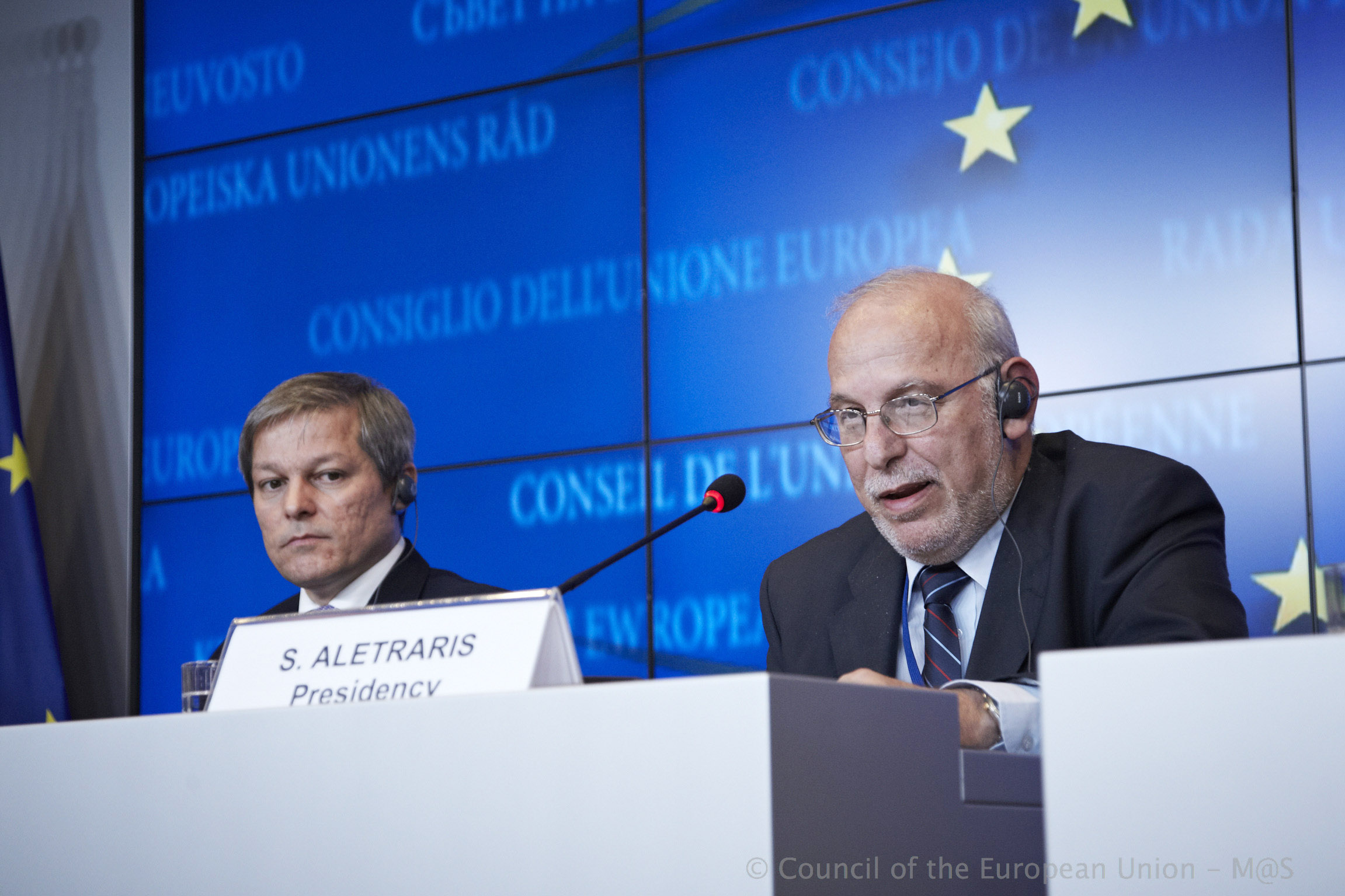
When the Agricultural Council meets tomorrow and Wednesday (18-19 December) it will discuss the Cyprus Presidency’s progress report on CAP reform. As the first day of the December Council is devoted to the annual bargaining over fish quotas, this report will be presented in a public session (with web streaming) on the morning of Wednesday 19th.

The progress report is drawn up by the Presidency on its own initiative and summarises the main amendments to the four main CAP regulations as well as outstanding issues which are left for the Irish Presidency to resolve. As it is highly unlikely that the Irish Presidency will revisit issues unless they are expressly identified as unresolved (in square brackets), the progress report and the accompanying amended draft regulations give us a good idea of the evolution of the Council’s thinking since the end of the Danish Presidency last June.
In addition to the progress report, the latest drafts of the four regulations can be downloaded using the following links.… Read the rest

European Parliament postpones vote on CAP reforms

COMAGRI and the European Parliament have decided to delay their voting on the Commission’s CAP reform proposals until the New Year, according to a report in the UK Farmers’ Guardian today. The new timetable means that it is unlikely that the new regulations can be agreed between the Council and the Parliament until late in the Irish Presidency in the first semester next year.

The latest CAP reform timetable is:

December 15

    – deadline for compromise amendments to be presented to Agriculture Committee.

January 23/24, 2013

    – CAP vote in Agriculture Committee.

March 2013

    – plenary vote in Parliament.

March 2013 onwards

    – trilogue negotiations between EU Commission, Parliament and EU Ministers.

Whether this means that the new CAP regulations can come into force on 1 January 2014 or not is unclear. In the press report quoted above, the NFU calls on the Agriculture Commissioner to prepare transitional rules on the presumption that this is unlikely to happen.… Read the rest

October Agricultural Council continues CAP debate

Agricultural Ministers continued to grind through their discussions on CAP2020 issues under the Cypriot Presidency at the Agricultural Council meeting on 22 and 23 October earlier this week. Three issues were on the agenda: internal convergence, support for young farmers in Pillar 1, and a strengthened role for producer organisations. The background note prepared by the Presidency is here, and the conclusions of the meeting are reported here. The discussions took place on the basis of two questionnaires circulated by the Presidency on internal convergence and young farmers, respectively.

Internal convergence

Many member states applying the Single Payment Scheme (SPS) have voiced concerns about the difficulties in achieving a uniform level of distribution of direct support at national or regional level (internal convergence) by 2019. The Commission has indicated its openness to address these concerns and to consider suggestions for some flexibility in the rhythm and methodology of progress, without prejudice to the principle of achieving internal convergence.… Read the rest

Perspectives on the CAP2020 debate

I am currently in Brazil attending the 28th International Conference of Agricultural Economists. Yesterday, there was a well-attended session on “The European Union’s Common Agricultural Policy after 2013: what is happening, what is likely to happen, and why?” which was designed to provide an opportunity to explain and interpret the CAP reform debate to those attending the conference from other parts of the world. There were three presentations in the session which I link to in this post.

Giovanni Anania (University of Calabria)’s presentation first summarises the Commission’s original Oct 2011 proposals, explains the decision-making process and describes what has happened so far in the negotiations. He then makes an informed speculation on the likely outcome, emphasising the forces pushing for more flexibility in implementing the Commission proposals. He hypothesises that there may be an inverse relationship between the ultimate financial envelope allocated to the CAP and the extent of flexibilities that are ultimately agreed.… Read the rest

Court of Auditors wants clearer objectives for post-2013 CAP reform

The European Court of Auditors is best known as the watchdog of the reliability and legality of the EU’s accounts. In its special reports it often undertakes an assessment of specific areas of Union activity, and it has published various reviews of specific aspects of agricultural expenditure over the years.

It can also submit opinions at the request of one of the other institutions of the Union, and it has just released an opinion on the Commission’s legislative proposals for the CAP post-2013 announced in October 2011.

The opinion focuses on whether and to what extent the Commission’s legislative proposals remedy weaknesses already identified by the Court following its audits. Subsequently it presents some further reflections resulting from the Court’s analysis of the proposals.

The opinion is comprehensive, addressing issues in all four of the main draft regulations in the Commission’s package. One of the guiding principles behind the Court’s observations is whether the proposals facilitate sound financial management by shifting from the current focus on compliance and financial implementation towards a performance-based system, with clear objectives and criteria against which performance can be measured.… Read the rest

Basic Direct Payments for EU Farmers: The Proposal of the Commission of the EU

Direct payments are the most important budget outlay

EU expenditure on Agriculture and Rural Development makes up a high share of total EU expenditure. The share was – according to official information – 41 per cent of total EU expenditure in 2011 and amounted to €55.269 billion. The position ‘Direct Payments’ was the most important budget outlay during the present Financial Framework with €39.771 billion in 2011; it made up a share of 72 per cent of the total expenditure on Agriculture and Rural Development.

This budget item came into existence in 1993 as the Council of Agricultural Ministers had decided in 1992 to reduce the intervention prices for grain by about 33 per cent and to also reduce the support price for oilseeds. It was a widely held agreement in 1992 that farmers should be fully compensated for the income loss incurred from the price cut. This item grew over time as institutional prices for other agricultural products had to be reduced due to international pressure.… Read the rest

The future for national envelopes and Member State flexibility in Pillar 1

A feature of the move towards decoupled direct payments in the EU since the Fischler 2003 reform has been greater flexibility for Members States in the management of these payments. This can be seen in various ways: the different options on which to base the Single Payment Scheme; different cross compliance requirements including definition of Good Agricultural and Environmental Conditions; different possibilities for modulating payments between Pillar 1 and Pillar 2; and provisions for ‘national envelopes’ and for the retention of partial coupling.

In this post I examine the future for national envelopes and partial coupling in the light of the Commission’s draft regulation on direct payments after 2013. At issue is the extent to which the draft proposals expand the scope for coupled payments and national flexiblity more generally in the post-2013 period.

National envelopes sometimes refer to the overall ceiling on the funding for direct payments allocated to each Member State, but here I use it in the more specific sense to refer to the share of direct payments over which Member States have some discretion over how to make these payments.… Read the rest

Ciolos hearing at the House of Commons

On 13 January, Dacian Ciolos gave testimony to the UK Environment, Food and Rural Affairs Committee on CAP reform.

Emphasis on international competition as a justification for income support

I don’t see how our agriculture can, at the same time, be competitive in the international market and have higher level of standards than farmers in other parts of the world.

But if we don’t have this minimum support for income and compensatory payments, the risk is that a lot of farmers who can be competitive without the crosscompliance rules that we have in Europe but not in other parts of the world-who in normal situations can be competitive-will not be competitive.

Active farmers

Ciolos showed strong commitment to the concept of ‘active farmers’. He stated one minimum requirement clearly. When asked whether he would “expect some agricultural goods to be produced for someone to be defined as an active farmer?”, Mr.… Read the rest

Food for thought against food security concerns

World food prices are on the rise again. In December 2010, they exceeded the dramatic peak they had reached during the global food crisis in 2007/08. Add to this threatening megatrends, such as population growth and climate change, and think of recent news about the severe drought in Russia or the once-in-a-century flooding in Australia, both major staple food exporters. Who wouldn’t get an uneasy feeling that the specter of famine might come to haunt Europe again?

The European Commission has concluded in its communication on the post-2013 CAP that the CAP must preserve the EU’s food production potential, ‘so as to guarantee long-term food security for European citizens’. Similarly, ministers of agriculture from 22 member states claim in their Paris Declaration that ‘only an ambitious, continent-wide policy can safeguard Europe’s independence’.

Surprisingly, however, there are no scenarios and no calculations to substantiate this perceived threat. Only the Department for Environment, Food and Rural Affairs (Defra) has conducted a Food Security Assessment.… Read the rest