UK Brexit and WTO farm support limits

Today, we are pleased to present a guest post by Lars Brink who is affiliated with the Global Issues Initiative at Virginia Tech University and a leading expert on domestic support issues in the WTO Agreement on Agriculture.

Background

Domestic support and Bound Total AMS (Aggregate Measurement of Support) may not be high priority items, compared to market access, in terms of analysing trade distortions. Still, anything that touches on farm support and limits on such support attracts attention. This may apply also in a case of Brexit negotiations. This note is about the WTO domestic support commitment of the United Kingdom in case of a Brexit. It thus concerns the Bound Total AMS of the UK and that of the remaining EU27. The EU refers to the European Communities and the European Union, and EUR refers to European Currency Units (ECU) and euros.

In his immensely insightful post on 5 January 2016 entitled WTO dimensions of a UK ‘Brexit’ and agricultural trade, Alan Matthews raised the possible need to share out the EU commitment between the UK and the remaining EU27 (no, Alan did not make me say this as his price for accepting this post).… Read the rest
WTO dimensions of a UK 'Brexit' and agricultural trade

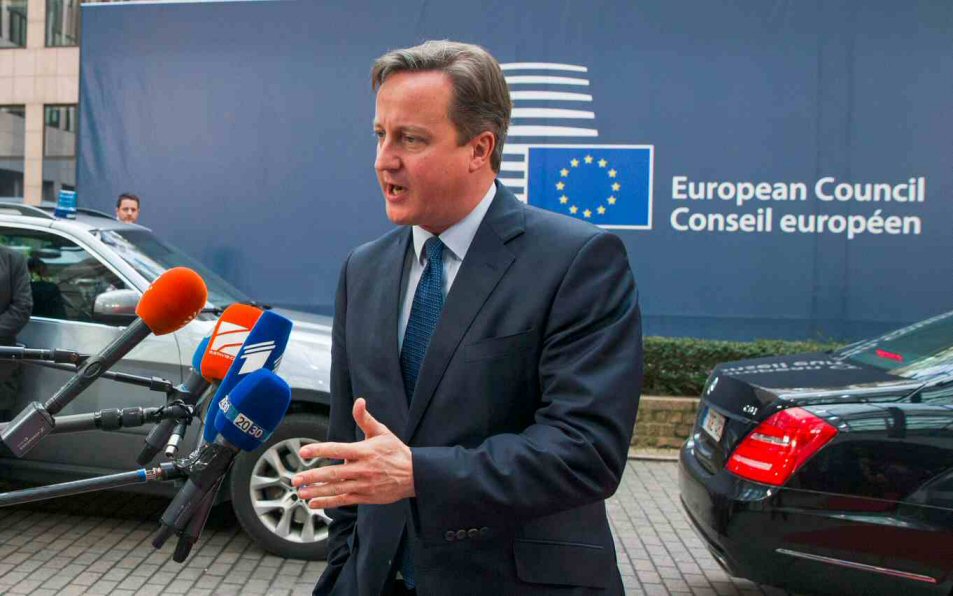
Following a first round of discussions on UK demands for a renegotiation of the terms of its membership of the EU at the European Council meeting last month, it now seems that the February meeting of the Council will agree on some package of measures and promises in response to UK Prime Minister David Cameron’s demands. It will then be up to Cameron to decide if this package is sufficient for him to campaign to stay in the EU in the referendum promised to take place before the end of 2017 and possibly later this year.

Even if Cameron decides to campaign in favour of staying in, there is no guarantee that the UK voters will follow him. A possible Brexit, or UK exit from the EU, remains a distinct possibility.

If a Brexit were to occur, the UK would have to decide on what agricultural and agricultural trade policy it wished to pursue outside the EU.… Read the rest

The EU has finally agreed to eliminate export subsidies…three cheers!

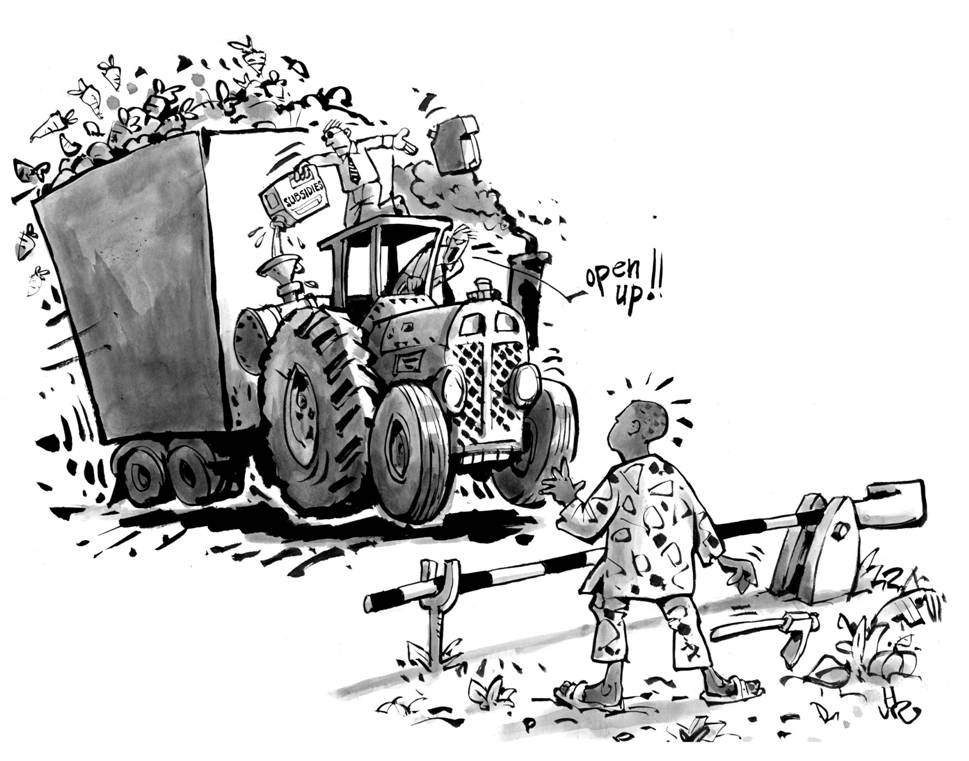
As long as I have been commenting on the CAP, its most criticized feature has been its use of export subsidies, also called export refunds. In the late 1980s and early 1990s, the EU was spending €10 billion a year on export subsidies, almost one-third of the CAP budget, in order to allow traders to get rid of the EU’s growing export surpluses by paying the difference between the EU’s high internal prices and lower world market prices.

Export subsidies allowed EU exporters to grab market share in import markets from competing exporters, put downward pressure on the level of world market prices, and competed unfairly with local producers in many developing countries. The damages caused were brilliantly highlighted and analyzed in a series of powerful reports and pamphlets by development NGOs such as Oxfam (Stop the Dumping! How EU Agricultural Subsidies are Damaging Livelihoods in the Developing World, 2002; Dumping on the World: How EU Sugar Policies Hurt Poor Countries, 2004); Aprodev (No More Chicken, Please, 2007; Preventing Unfair ‘Dumping’ of EU Subsidized Food, 2011); ActionAid (Milking the Poor; How EU Subsidies Hurt Dairy Producers in Bangladesh, 2011) and Brot für die Welt (Milk Dumping in Cameroon: Milk powder from the EU is affecting sales and endangering the livelihoods of dairy farmers in Cameroon, 2009).… Read the rest

TTIP and the potential for US beef imports

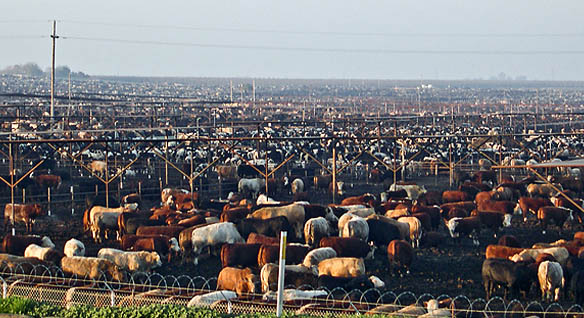
Beef is generally considered to be a sensitive sector in the EU-US negotiations on a possible Transatlantic Trade and Investment Partnership (TTIP) agreement. Currently, imports of beef from the US are limited by high tariffs and by the refusal of the EU to allow the import of beef produced with the aid of pharmaceutical technologies such as hormones and beta-agonists (a class of non-hormonal compounds that act to increase feed efficiency).

Nonetheless, EU imports of non-hormone-treated beef from the US have been increasing in recent years. Different views have been expressed about the likely consequences for the EU beef market if market access were further liberalised under a TTIP agreement. I examine the background to this issue in this post.

The WTO beef hormones dispute

Negotiations to increase US access to the EU market for beef as part of a TTIP agreement take place against the background of special trade concessions agreed following a complex series of disputes taken originally under the GATT and, subsequently, under the WTO’s dispute settlement process.… Read the rest

WTO failure on trade facilitation agreement puts question mark over Doha timeline

On Thursday this week, the WTO Director-General Robert Azevêdo admitted to failure in concluding the negotiations to adopt the Protocol of Amendment on the Trade Facilitation Agreement (TFA) by 31 July as had been agreed by Ministers at the WTO Ministerial Conference in Bali last December. The Protocol of Amendment was intended to start the process to formally insert the trade facilitation deal into the overall WTO Agreement.
The TFA was part of a carefully-balanced package at Bali designed to get substantive negotiations on the Doha Round again underway. In addition to a series of decisions and declarations on trade facilitation, agriculture, cotton, development and least developed country (LDC) issues, the Ministerial Conference had set a deadline of the end of 2014 for the Trade Negotiations Committee to develop a clearly-defined work programme on the remaining Doha Round issues. Work in Geneva had begun to focus on developing this work programme, but as Director-General Azevêdo admitted to the meeting of the WTO General Council on 25 July last, the talks were still at an early stage.… Read the rest

Changing patterns of global agrifood trade

Publication of the latest United Nations International Trade Statistics Yearbook with comparative figures from 2000 to 2012 gives an insight into the important structural changes in patterns of global agrifood trade over the past decade. The figures underline the way in which developing countries have become the dynamic motor behind agrifood trade flows, a finding which has relevance when discussing the coverage of WTO trade rules.
During this period agrifood trade maintained and even increased its share of total merchandise exports. It share was 6.1% in 2000, but increased to 7.0% in 2009 following the sharp rise in global food prices in 2008-09. Its share has subsequently fallen to 6.5% in 2012, which is still ahead of the 2000 figure.
The UN figures define agrifood trade as the food, drink and tobacco (FDT) items covered by Chapters 0 and 1 in the Standard International Trade Classification (SITC). This definition excludes agricultural raw materials (SITC 22) as well as oilseeds and oils (SITC 4) but it does include fish (SITC 03).… Read the rest

The G-33 public stock-holding proposal for Bali

The new WTO Director-General Roberto Azevêdo gave a rather downbeat assessment last week to the WTO Trade Negotiations Committee on the state of play of the texts which are meant to be agreed at the Bali Ministerial Council in early December. In an earlier post I discussed the issues put on the table by developing countries to make up the agricultural element of this Bali ‘mini-package’. These include new rules to deal with underfill of tariff rate quotas, a halving by developed countries of their ceilings on allowed export subsidies, and an exemption for developing countries from regular WTO disciplines on purchases of food products from low-income farmers at government-set prices when used for public stock-holding.
According to the Director-General, the state of play as of 12 November last on these three elements is as follows:

Let’s start with the G33 proposal [on public food security stocks. I have a positive feeling here.

Read the rest

Life after Bali for the WTO Doha Round

Some weeks ago I discussed the prospects for a Doha Round mini-package at the next WTO Ministerial Council meeting in Bali in December, and I explained the proposals making up the agricultural elements of that mini-package. A recent paper produced jointly by the Geneva-based International Centre for Trade and Sustainable Development (ICTSD) and the Food and Agriculture Organization (FAO) also provides a useful introduction to the agricultural issues at stake in the Bali talks.
Since then, the Chair of the agricultural negotiations has provided a status update on the progress towards agreement on this mini-package. It makes for tortuous reading as the negotiators get into mind-numbing detail on aspects of the proposals. At the same time, the new WTO Director-General, Roberto Azevêdo, has warned that the count-down to Bali has begun and, despite his determined optimism in his report to the informal meeting of the WTO Trade Negotiations Committee (which oversees the negotiations) earlier this month it is clear there is still some way to go if concrete results are to be achieved at this meeting.… Read the rest

The Doha Round Bali ‘mini-package’ in agriculture

In the previous post, I discussed the process leading up to the forthcoming Bali Ministerial Conference of the WTO and the prospects for progress on a Doha Round ‘mini-package’. This ‘mini-package’ is planned to consist of three components: trade facilitation, some development/LDC issues and some agricultural elements (with the possibility of including other elements such as the dispute settlement review and the Information Technology Agreement if progress allows). In this post I discuss the issues being negotiated as part of the agricultural strand of this package.
The agricultural consultations have focused around three proposals tabled so far:
• a G-20 non paper which proposes an understanding on tariff rate quota (TRQ) administration provisions. This proposal envisages tighter disciplines for administering tariff-rate quotas, and how to deal with the possibility that the methods used might impede trade.
• a G-33 proposal on some elements of the draft modalities text on agriculture for early agreement to address food security issues.… Read the rest

Prospects for a Doha Round mini-package at Bali this year

With Brussels and national capitals closed for the month of August so little happening on the CAP front, it is timely for a stock-taking of the state of play in the multilateral trade negotiations.
In December later this year, the WTO at its 9th WTO Ministerial Conference in Bali, Indonesia will make yet another effort to salvage some concrete deliverables from the tortuous Doha Round negotiations. The negotiations have proceeded in fits and starts, but with more fits than starts, since the cancellation of what should have been the 7th Ministerial Conference (MC) in Geneva in December 2008 following the failure to agree on revised modalities documents.
The Doha Round negotiations were revitalised in early 2011 following strong political guidance by the leaders of the G20 at the Seoul Summit in November 2010. The objective was to reach outlines of a comprehensive package by the summer, and to finalise the agreement by the end of the year.… Read the rest