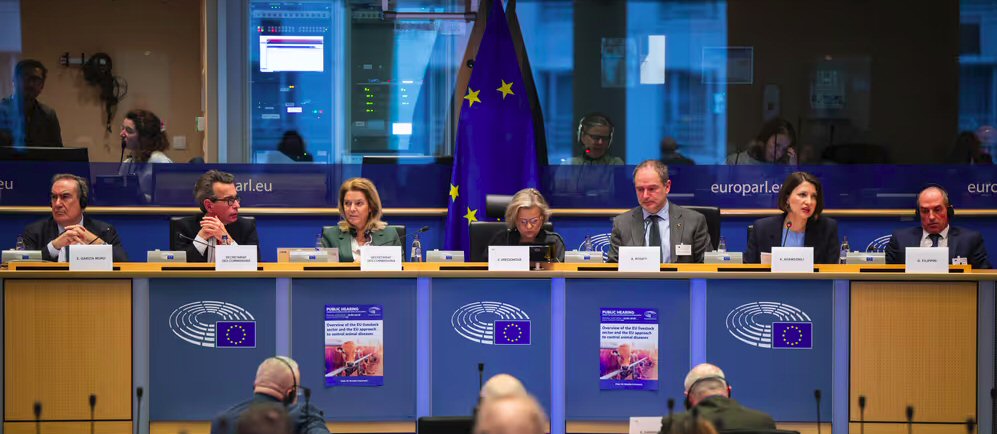


Next Wednesday 2 September, the Agriculture and Rural Development Committee of the European Parliament will discuss the rapporteur Norbert Lins (EPP)’s draft report on the CAP Regulation post 2027 and the rapporteur Eric Sargiacomo (S&D)’s draft report on amendments to the Common Market Organisation (CMO) Regulation. Much attention has been devoted to the changes proposed for the CAP subsidy policy since the Commission announced its proposal in July last year. Less attention has been paid to the Commission’s proposals for amendments to the CMO Regulation.
In part, this is because the Commission’s amendments were rather narrowly focused on a selected number of issues: the school scheme, sectoral interventions, creation of a protein crop sector, hemp, new marketing standards, import safeguards, and crisis preparedness. However, the rapporteur’s draft report and the range of amendments tabled by MEPs turn the CMO legislation into a broader debate about the future role of market intervention, strengthening farmers’ position in the food supply chain, and livestock, meat and alternative proteins. In this post, I summarise some of the key themes and positions that are up for discussion next Thursday.
There are in total almost 1600 amendments to the Commission’s proposal. As is frequently the case, there is a great deal of duplication, particularly among amendments to recitals, definitions and the meat designation provisions. There are also many amendments which make relatively technical changes. I have selected seven areas to highlight, recognising that additional changes are proposed in the sugar sector, marketing standards, hemp, dairy contracts, and import safeguards, that I do not discuss here.
EU school scheme interventions
Member States would be required to implement a school scheme under the Commission proposal (the revised Article 27(4) of the draft CMO Amendments Regulation). The scheme is included as a CAP intervention but it must be financed from the unallocated amounts in the National and Regional Partnership Fund (NRPF) rather than from within the CAP minimum ring-fenced amount (the latter only includes payments made directly to farmers). Some stipulations regarding the financing of the school scheme are set out in the draft NRPF Regulation, but the objectives and minimum obligations are set out in the revised Articles 27-29 of the draft CMO Amendments Regulation. The legal provisions set out the basic policy parameters, leaving greater responsibility for Member States as to how to meet the objectives and achieve the targets.
To reduce schoolchildren’s consumption of free sugars and fats, relevant products are to be limited or excluded from the scheme. Member States should prioritise the distribution of products originating in the EU that meet high standards of environmental and social sustainability. It would be mandatory to raise children’s awareness of agriculture, the variety of products grown in the EU, sustainability, healthy diets, and combating food waste.
The rapporteur’s own amendments are mainly concerned with moving the provisions related to the school scheme now in the draft NRPF Regulation into the CMO. The parliamentary amendments pull in several different directions.
The first is funding. A number of amendments seek to preserve a dedicated, predictable EU budget rather than subject the scheme to competition within the new Fund. Amendment 485, for example, proposes a ring-fenced allocation within the NRPF of €1.757 billion for 2028 to 2034. Amendment 487 proposes that this would be financed through a dedicated EU budget line rather than through the NRPF amounts pre-allocated to Member States.
The second is whether participation should remain voluntary. Amendment 486 explicitly says that Member States should be able to choose whether to include the school scheme in their NRP plans.
The third is the composition of the products supplied. There is a substantial political contest over milk versus plant-based alternatives. Amendments 616 and 618 permit unsweetened plant-based drinks, while other amendments seek to maintain or strengthen the position of milk and milk-derived products. Amendment 619 would add apiculture products. Amendment 620 would require a fair share of school scheme aid to support plant-based products.
There are also amendments concerning geographical indications, quality scheme products, mountain products and products from the outermost regions, for example Amendments 660 to 668, or products from holdings where the head of holding is a young farmer or a female farmer or where products originate from family farms (Amendments 669-671).
The underlying issue is thus not simply “school scheme yes or no”. It is about funding security, Member State discretion, and the scope of eligible products including whether there should be a role for plant-based alternatives.
Sectoral interventions
The Commission proposes to retain sectoral interventions but adapt them to the post-2027 Fund and extend the range of sectors eligible for them. These include fruit and vegetables, wine, protein crops, apiculture, olive oil and table olives, hops and potentially other sectors. A criticism of the proposal is that there is no longer specific funding made available for these sectoral interventions as is the case for some sectors in the current CAP, notably fruits and vegetables.
The rapporteur’s amendments seek to transfer a substantial amount of the detailed financing architecture from the proposed NRPF legislation into the CMO itself. In doing so, there are slight adjustments to the maximum support rates proposed by the Commission, some in a downward direction, others in an upward direction (for example, the maximum support rate of 100% for interventions concerning market withdrawals for free distribution would be permitted for withdrawals up to 15% of the marketed production of a PO rather than the Commission proposal of 5%) (Amendment 1093).
Other amendments address questions such as who should be eligible for funding, where does the funding come from, and how discretionary is the system.
Where the Commission would make it mandatory for Member States to provide support for sectoral interventions in protein crops, hops, olive oil and table olives, and fruits and vegetables with producer organisations or associations of producer organisations in those sectors, the rapporteur would restrict this to the latter two products (Amendment 977). Amendment 1089 would make sectoral programmes for wine obligatory in wine-producing member states. Other amendments (978 through 984) would relax the limitation to POs or APOs under certain circumstances.
Several amendments (1028, 1029 and 1030) propose that Union financial assistance for sectoral interventions should be financed directly from the EU-level NRPF budget rather than from the national NRP allocation. Their justifications explicitly argue that this would preserve the logic of direct EAGF financing under the current CAP and avoid disadvantaging producer organisations operating across Member States.
Protein crops: creation of a new sector
The Commission wants to create a distinct protein crop sector under the CAP, partly to encourage EU production and reduce dependence on imported high-protein feed. The existing dried fodder sector would effectively be reorganised, with products moved into the new protein sector. Producer and interbranch organisations in the sector would receive mandatory recognition.
The rapporteur supports this direction, but proposes changing the terminology and broadening the concept. His amendments would call it the leguminous crops sector, rather than the protein crop sector (Amendments 177 to 179). Amendment 1085 would require protein sector operational programmes to contain analyses of production, consumption, sovereignty and development potential, quantified objectives for increasing EU legume production and consumption, financing plans and monitoring indicators. It would also create a dedicated protein crop market observatory.
Public intervention, reference thresholds and market safety nets
The Commission proposes deleting Article 7 of Regulation 1308/2013 which sets reference thresholds for specific commodities (cereals, paddy rice, sugar, beef and veal, butter and skim milk powder, pigmeat, olive oil). These reference thresholds (previously known as reference prices) are used to trigger safety net mechanisms such as public or private intervention, or safeguard measures against low-cost imports. The Article specifies that the reference thresholds should be kept under review by the Commission and updated in accordance with the ordinary legislative procedure in the light of developments in production and markets. However, the CJEU ruled in 2016 that the reference thresholds had to be established by the Council only under Article 43(3) TFEU. Hence the Commission’s rationale to propose deletion of this Article.
The rapporteur does not dispute this legal decision but substitutes a requirement that the Commission should propose a revision to update the reference thresholds by 31 December 2027 and every two years subsequently (Amendment 16). This cleverly does not seek to bind the Council, only that the Commission should make a proposal. But this is not without consequences. At present, the Council is unable to take a decision to raise the reference thresholds even if it wanted to in the absence of a Commission proposal. By obliging the Commission to make a proposal, the amendment would require the Council to regularly take stock of the level of reference thresholds and would increase the likelihood that the reference thresholds are indeed increased. Although we should note that, even if the Commission is obliged under this amendment to propose a specific level of reference thresholds (see next paragraph), the Council would still retain the right under the Treaty to set the thresholds at whatever level it deemed appropriate.
30 August 2026. It has been pointed out to me that the Commission‘s power to make legislative proposals is an exclusive right, meaning that the legislator may not oblige it in an act of secondary law to make proposals in specific circumstances. The Parliament and Council may request the Commission to come up with an initiative (cf Articles 225 and 241 TFEU) but the Commission is not obliged to honour such requests. The Court of Justice has confirmed this interpretation (C-409/13). It is thus likely to be the case that the Commission will invoke its prerogatives in the legislative negotiation meaning that this amendment will not be further pursued.
Significantly, the rapporteur proposes that the reference thresholds should be set at 80% of the average of the full production costs in the Union to provide an effective safety net in the event of a crisis (Amendment 16). He argues this would not constitute income support through prices, but rather protection against excessive market disturbances. He also proposes using the thresholds as a reference for activating safeguard measures and limiting imports during overproduction crises. Furthermore, the Commission would be obliged to propose measures to rebalance the markets within two months of market prices falling below the reference levels.
Public intervention would be extended to sugar, and sheep and goat meat (Amendments 17 through 19). Public intervention stocks could be resold to Member States to replenish their emergency and reserve stocks or, in the case of cereals and sugar, be sold for biofuel (Amendment 20).
The rapporteur’s amendments are also intended to limit the discretion the Commission currently has to propose action in the case of market disturbances (Article 219 of the CMO Regulation) and severe market imbalances (Article 222 of the CMO Regulation). The rapporteur proposes that a “market disturbance” occurs where prices in the Union fluctuate sharply, whether upwards or downwards, by more than 15% over a three-month period, or a situation where, for more than six months, prices remain stable but below 80% of the full costs for Union producers (Amendment 14). A “severe market imbalance” would occur in a situation where the volumes produced or consumed in the Union and the volumes imported from or exported to third countries fluctuate by more than 15% over a six-month period (Amendment 15). The CMO Regulation Articles only empower the Commission to take action in these situations and there is no obligation on the Commission to do so. Nonetheless, the Commission would come under more pressure to defend a decision not to intervene where these specific thresholds were met.
Producer organisations, bargaining power and farmers’ position in the food chain
The Commission already places considerable emphasis on producer organisations and collective action as ways of improving farmers’ position in the value chain. The Committee MEPs’ amendments attempt to give that principle greater legal force. For example, Article 152 of the CMO Regulation sets out a range of specific aims for producer organisations, from which they must pursue at least one to be recognised as a PO. Amendment 1288 from the rapporteur would add to the objectives of producer organisations the strengthening of producers’ bargaining power through collective bargaining over contracts, prices, volumes, delivery schedules, review clauses and payment terms, as well as contributing to a fairer distribution of value in the supply chain. Amendment 1289 would allow producer organisations to jointly organise services relating to climate adaptation, risk prevention, fossil-fuel dependence and renewable energy, as well as tools incorporating production costs and climate risks into decision-making.
Amendment 1324 from the Greens/EFA political group would build on the introduction in the CMO of an article (Article 172) in 2021 permitting farmers to agree with downstream operators on value-sharing clauses determining how any evolution of relevant market prices for the products concerned is to be allocated between them. The amendment would give Member States the power to require contracts to contain value-sharing provisions indexed to a reference cost index based on full production costs, while empowering the Commission to lay down the methodology to construct this index in delegated acts.
Protection of meat-related terms
The Commission proposed specific protection for meat-related terms, arguing that this is necessary to enhance transparency in the internal market as regards food composition and nutritional content and ensure that consumers can make well-informed choices, particularly for those seeking a specific nutritional content that is traditionally associated with meat products. However, its proposal has been overtaken by events. In Regulation (EU) 2026/1739 on strengthening the position of farmers in the food supply chain adopted in July 2026, the legislature has already specified that ‘meat’ should remain the edible parts of animals. Specifically, that legislation has already adopted the Commission proposal for the list of meat-related terms that are reserved for meat from animals and which explicitly cannot be used to designate food consisting of, isolated from or produced from cell culture or tissue culture derived from animals, plants, micro-organisms, fungi or algae. In fact, that legislation goes further than the Commission proposal by adding steak and liver to the list of 31 terms.
Some Committee amendments aim to strengthen these limitations further by extending them to format-based names. Amendment 1588 would reserve terms including burger, hamburger, sausage, chorizo, salami, pepperoni, ham, meatball, minced meat, nugget, escalope, schnitzel and fillet for processed meat products. Amendment 1589 has a similar but slightly different list. On the other hand, Amendments 1581 and 1582 try to mitigate some of the impact of the legislation adopted in July by allowing the use of meat-related terms for food containing no ingredients of animal origin where there is clear labelling indicating that this is the case.
Food security preparedness and crisis management
The Commission proposal requires every Member State to have agricultural preparedness and response plans, including regular sharing of information on stocks of agricultural products, the designation of competent authorities and participation in EU-level stress testing exercises. These efforts should be complemented by enhanced obligations during crises or high-risk situations, including mandatory reporting.
The proposal also sets down some minimum requirements for national food reserves (defined as stocks held by public or private operators designated for military or civil protection use in emergencies or crises, including humanitarian interventions or stocks kept available to ensure food security during major supply disruptions) with a view to minimise any disruptive effects on markets of these stocks. No plans for a Union-level stock-holding policy are included. The European Food Security Crisis Preparedness and Response Mechanism (EFSCM) is put on a legislative footing.
The Committee’s amendments would expand the coverage to include strategic inputs as well as food and agricultural products (Amendments 141 and 142). The intention would be to maintain the availability of critical inputs (fertilisers, feed additives, seeds, etc.) with a view to preserving agricultural production capacity in the event of a serious and protracted crisis (Amendment 146). Amendment 153 opens the possibility for the Commission to temporarily suspend the use of consumable agricultural products for biofuels, with compensation to the operators involved where appropriate. Amendment 161 would make a distinction between emergency stocks and reserve stocks, where the former are intended for use in humanitarian emergencies while the latter would be available to food supply chain players to ensure food security during major supply disruptions. Amendment 162 would introduce the option for Member States to designate a central stockholding entity for the acquisition, maintenance and sale of products for emergency and reserve stocks, drawing on the model used for emergency oil stocks. A later Amendment 1423 introduces the concept of contracted availability stocks, whereby private operators could contractually reserve products or production, processing, storage, transport or delivery capacity for use in emergencies.
Conclusions
The COMAGRI meeting next Thursday 3 September is merely the opening shot in preparing the Parliament’s first reading position. It is an opportunity for the rapporteur to defend his draft report, while the shadow rapporteurs will state their groups’ core priorities and red lines. The debate helps the committee to determine where the major political disagreements lie and which topics have broad support. It starts a process where the rapporteur and shadow rapporteurs hold technical and political meetings to merge overlapping or conflicting proposals into compromise amendments. When the Committee returns to vote on its position, these compromise amendments are first voted on and, if adopted, they supersede the individual amendments they replace. The issues are discussed here to give a flavour of the amendments that have been tabled to date.
The rapporteur Eric Sargiacomo has summarised his proposals in a LinkedIn post as based on several priorities.
- Making the European School Food Programme a flagship tool of the CAP by simplifying its rules to allow more Member States and institutions to take advantage of it.
- Strengthening the collective organisation of producers by securing the financing of operational programmes and giving more resources to producer organisations.
- Building real strategic food stocks by strengthening the Commission’s proposals and drawing inspiration from strategic oil stocks, while integrating certain essential inputs into agricultural production.
- Giving real safety nets back to farmers by raising the value of European minimum prices, which are currently largely disconnected from economic realities.
- Responding more quickly to crises of overproduction and destabilizing imports to prevent farmers from bearing the consequences of the collapse of the markets alone.
The rapporteur would clearly like to re-introduce a greater degree of market management in agricultural markets as compared to the Commission proposals, perhaps reversing somewhat the philosophy of market orientation that has governed recent CAP reforms. Whether this is a desirable direction to move can be discussed, but the amendments proposed move the CAP in this direction. Ultimately, the decision on the level of the reference thresholds which trigger both intervention and import safeguard actions remains with the Council. However, the requirement to regularly respond to a Commission proposal to raise the reference thresholds would be more likely to see the Council agree to increase these levels. The attempt to limit the discretion of the Commission to declare a market disturbance or a severe market disruption by setting objective criteria would also be workable, although in itself it cannot require the Commission to intervene to restore market balance.
The further attempt in the Committee’s amendments to restrict the use of additional meat-related terms is, in my view, unnecessary and undesirable (consumers are well able to make the distinction between animal-source foods and plant-based alternatives and alternative proteins should be allowed to compete on a level playing field).
It is clear there is a wide range of views on the school scheme, whether it should be mandatory or optional for member states, which products can be included, and whether it should be funded out of a ring-fenced budget in the EU action share of the NRPF. The political contest around the future role of plant-based alternatives is also evident in these debates.
Listen in to the debate on Thursday to gain a better sense of the issues at stake.
This post was written by Alan Matthews. Because of the number of amendments, I turned to OpenAI’s ChatGPT to organise and summarise the amendments under thematic headings. This helped to identify amendments relevant to particular topics, though there were many errors and misunderstandings in the resulting response. The post is thus my reworking of the ChatGPT material to correct these errors but more important to provide my own context and interpretations. I find this a sensible and defensible use of AI in policy analysis, but I am open to hearing the views of readers on this issue.
Photo credit: EP Photo Services © European Union – 2026.
1 Sept 2026. The date for the debate has been corrected to 2 September.

Dear Professor,
I consistently follow your blog, which is essential for anyone professionally involved in common agricultural policy.
In the article on the amendments of the European Parliament’s Agriculture Committee to the legislative proposal on CMO, there is a sentence that needs to be checked.
Paragraph 3 of Article 35 of the proposed NRPF regulation establishes that the intervention referred to in letter r) (support for interventions for certain sectors) is among those to be financed with the share of resources reserved for CAP established in Article 10, paragraph 2, letter a) point (ii).
Therefore, what is stated in the third sentence of the chapter on sectoral interventions on page 3 of your article (Sectoral interventions should be funded from the unallocated portion of the NRPF) appears to be incorrect.
Best regards
Ermanno Comegna – Rome, Italy
Indeed, Ermanno, you are quite correct and I have now corrected this. I was mixing up the absence of ring-fencing with where the source of the funding should come from. I’m very grateful to you for highlighting this, thanks a lot.