

This post is contributed by Pablo Palencia Garrido-Lestache who is a veterinarian and consultant with over 25 years of experience in One Health and agrifood strategy. He served as the Regional Minister for Rural Development, Livestock, Fisheries, and Food in Cantabria, Spain. Throughout his career, he has led the development of strategic projects for cooperatives and the establishment of PGI (Protected Geographical Indication) frameworks, focusing on integrating living heritage and ecosystem services into legal structures to ensure the resilience of livestock production systems. info@iberap.com
Three targeted regulatory reforms could turn Europe’s system of protected food names into the most powerful instrument for public health, economic sustainability and commercial differentiation currently on the table. The cost of inaction is incomparably greater than the cost of acting.
Europe holds the world’s most powerful agri-food instrument and does not know it. Its three thousand Protected Geographical Indications (PGIs) and Protected Designations of Origin (PDOs) are recognised in trade agreements with Mercosur, India and dozens of international partners. They are built on binding legal architecture, traceability systems and collective governance. They are, in short, operational platforms ready to transform how Europe grows, sells and safeguards its food. What is missing is political coherence: the decision to align this system with the One Health approach and the incentives of the Common Agricultural Policy.
The One Health principle holds that human, animal and ecosystem health are inseparable. This is not an academic concept. It is a reality lived every day by the hillside olive grower, the mountain cattle farmer or the vine-dresser tending terraced slopes. The living soil of an extensive dehesa woodland produces meat with greater nutritional value and lower antibiotic dependency. An olive grove managed with spontaneous ground cover generates oils richer in polyphenols with demonstrated anti-inflammatory properties. High-altitude pastoralism maintains ecosystems that act as buffers against zoonotic disease. Yet none of these outcomes is currently recognised, certified or financially rewarded within the framework of EU geographical indications or the CAP.
The soil beneath a centuries-old olive grove, the Atlantic meadow of an extensive livestock farm, the microbiome of an artisan dairy are biological capital. The EU should start paying for them as such.
Three targeted, complementary regulatory reforms can change this without dismantling what already works.
First reform: Regulation (EU) 1151/2012 (Food Quality)
Article 7 of Regulation 1151/2012 defines the technical specifications for each PGI or PDO. The proposed reform does not impose new conditions: it would simply allow producer groups that wish to do so to include, on a voluntary basis in the first instance, measurable indicators of soil health, biodiversity and nutritional profile as an excellence tier — One Health Certified — within their designation. The Commission, together with EFSA, the European Environment Agency and the Joint Research Centre, would develop a common technical framework of indicators to ensure comparability across all Union territories. The result: for the first time, a PDO could certify not only the geographical origin of a product but the health of the ecosystem that produces it.
Second reform: CAP Regulation (EU) 2021/2115 (Eco-schemes and results-based payments)
Article 70(3) of the CAP Regulation already provides for results-based environmental payments. The proposed reform uses this existing legal base to create a specific intervention that automatically links compliance with a One Health standard within a geographical indication to additional payments of between 200 and 500 euros per hectare per year, financed through the European Agricultural Fund for Rural Development EAFRD. This mechanism is the central engine of the model: it transforms One Health certification from a cost burden into a source of income. A farmer or livestock producer who demonstrates measurable results in soil health, antimicrobial reduction or increased biodiversity receives not only symbolic recognition through their PDO label. They receive a direct payment that makes it economically rational to keep doing well what they were already doing well.
Third reform: Food Information Regulation (EU) 1169/2011 (Health claims on labelling)
Regulation (EU) 432/2012 already permits the declaration that olive oil polyphenols contribute to cardiovascular protection, but under conditions so restrictive that almost no producer uses them in practice. The proposed reform would expand this framework to allow verifiable, consumer-readable claims on products certified under One Health: statements such as Produced in verified living soil or Certified biodiversity in the production landscape. These are not marketing slogans: they are the translation into consumer language of real, audited scientific data. They close the economic circle of the model by connecting the producer’s certification directly to the health-conscious consumer’s purchasing decision.
The impact: a question of scale
The three thousand European PDOs and PGIs represent approximately 15 per cent of the total value of EU agri-food production: more than 74 billion euros annually. Yet only 14 per cent of European consumers recognise the PGI label, according to Eurobarometer. This low penetration reflects a communication failure: consumers do not understand what the PDO label actually promises them. A verifiable, measurable One Health certification solves precisely this problem, because it connects the label to values that 2026 consumers already understand and act upon: personal health, biodiversity, sustainability. Market research is consistent: European consumers in the health-conscious segment are willing to pay between 40 and 120 per cent more for products with certified and verifiable health properties.
The effect on producers is equally transformative. A farmer raising native breeds in high-altitude extensive systems who certifies antimicrobial reduction within their PGI framework would gain: the One Health results-based CAP payment (200 to 500 euros per hectare), a market price premium for the demonstrated health value of the product, and a structural shield against competition from third-country imports that can never replicate the cultural and ecosystemic component of a European geographical indication. This last point is strategically critical in the context of the EU-Mercosur agreement: European GIs are legally unassailable in international trade law. Adding the One Health layer transforms them into the most robust available shield against industrial import price pressure.
A One Health GI does not only export a protected name. It exports a verified environmental and health standard that no global competitor can replicate.
The public health dimension is the most underestimated aspect of this model. The World Health Organisation estimates that 70 per cent of emerging infectious diseases in humans have animal or zoonotic origins. Extensive production systems linked to geographical indications are, by their very nature, those that contribute least to antimicrobial resistance, to pathogen concentration in industrial facilities and to the destruction of habitats that act as barriers against zoonoses. Monetising these public health outcomes through the CAP is not a gift to farmers: it is an investment with a demonstrable return in reduced European healthcare expenditure, quantifiable in billions of euros annually.
The missing decision
Europe does not need to invent new instruments. The GI system is legally consolidated. The CAP has the architecture to pay for results. The One Health approach is official policy of the Commission, the WHO, the FAO and the WOAH. What is missing is the political coherence to connect these pieces into a single reformed framework. The three regulatory changes described here do not dismantle the existing system: they deepen it. They transform geographical indications from labels of origin into platforms for territorial governance, and transform producers from subsidy recipients into active stewards of Europe’s biological capital.
The cost of inaction is visible and quantifiable: the abandonment of the most culturally and ecologically valuable extensive farming systems, the erosion of agricultural biodiversity, growing dependency on chemical inputs, loss of competitive position against third-country imports, and increasing pressure on public health systems from diseases linked to degraded food production environments. The cost of acting is three regulatory amendments.
The forthcoming CAP review and the ongoing negotiations on the EU food quality regulation are the window. There will not be another one like it for a decade.
This post was written by Pablo Palencia Garrido-Lestache.
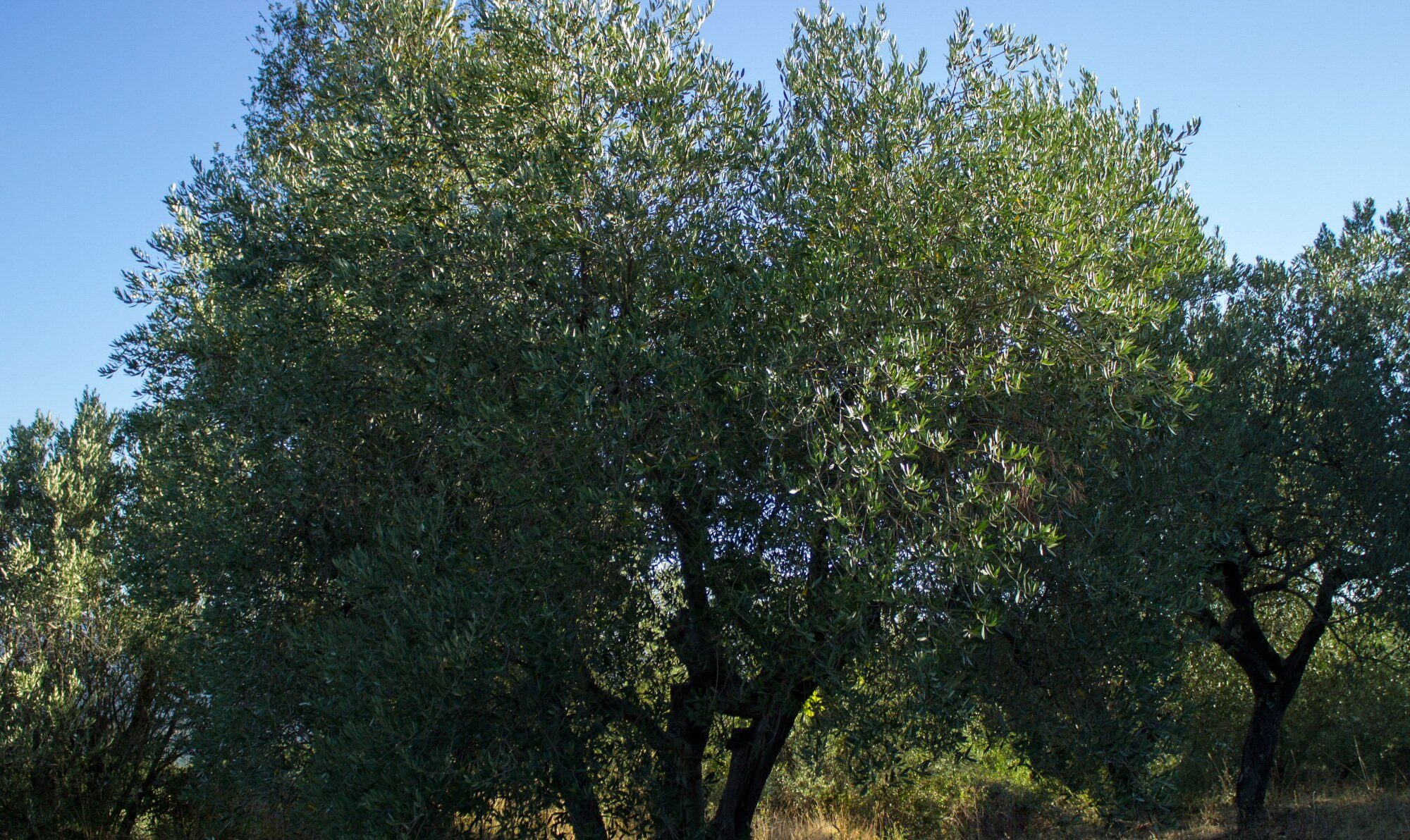
Photo credit: Olive trees from pxhere, used under a CCO licence.
