Price transmission in the dairy supply chain
DG AGRI’s Milk Market Observatory (MMO) is now proving its worth as a source of up-to-date data on milk and dairy product market developments. It is also an excellent source for historical time-series statistics which allow us to see patterns in the data and to develop hypotheses about the behaviour of actors in the food chain.
The chart below taken from the MMO shows the evolution of two indicators of producer prices for raw milk. One is the weighted average price that EU farmers received for raw milk at real fat and protein content (the ‘producer price’). The other is a hypothetical price, the farmgate milk price equivalent (FMPE), which is the price processors would be expected to pay based on the going market prices for butter and skimmed milk powder after deducting an average processing cost.
The producer price a farmer receives may be different from this hypothetical FMPE because of differences in actual fat and protein content from that assumed in the FMPE calculation, because actual processing costs may differ from those assumed in the calculation, and because much milk production is transformed into other types of dairy products which may have higher or lower value in the market place.… Read the rest

Which is the best risk management tool?

The extent and nature of the risk management tools that should be offered to EU farmers is one of the main issues which will be debated in the context of the future CAP after 2020. Already, in the COMAGRI amendments to the Omnibus Regulation, we see the interest of parliamentarians to extend the risk management toolkit and to make it more attractive for farmers to use.

The COMAGRI amendments seek to allow Member States to use CAP funds to contribute to insurance premiums for market-related hazards (that is, price variability) and revenue variations as well as just production variations due to adverse climatic events, diseases, pest or an environmental incident as at present; to provide for sector-specific income stabilisation tools so that farmers could enrol in schemes for a specific production and not necessarily for whole farm income; and would allow indemnification payments to farmers whenever the production loss (or income loss in the case of mutual funds operating an income stabilisation tool) exceeds 20% rather than the 30% in the existing legislation.… Read the rest

UK publishes proposals on customs arrangements with the EU

In her keynote Brexit speech at Lancaster House in January this year, the Prime Minister outlined:

“I do want us to have a customs agreement with the EU. Whether that means we must reach a completely new customs agreement, become an associate member of the Customs Union in some way, or remain a signatory to some elements of it, I hold no preconceived position. I have an open mind on how we do it. It is not the means that matter, but the ends.”

In the White Paper that followed in February, the Government stated that it would prioritise securing “the freest and most frictionless trade possible in goods (…) between the UK and the EU“.
Last week, the UK government published two policy papers which attempted to propose possible solutions to the conundrum posed by Brexit: how to facilitate “the freest and most frictionless trade possible in goods between the UK and the EU” once the UK leaves both the EU Customs Union and the EU Single Market.… Read the rest

Which EU countries will bear the brunt of a hard Brexit?

The withdrawal of the UK from the EU (Brexit) will have a negative economic effect both for the UK but also for the EU. The size of these negative effects will depend, in part, on the nature of the future trade relationship that may be negotiated if the Article 50 negotiations on withdrawal are successfully concluded and, in part, on the nature of the transition arrangements, if any, that may be agreed to bridge the period between Brexit Day and the entry into force of a future trade agreement.
The UK government’s objective for the long-term relationship remains that set out in the Lancaster House speech last January, namely, withdrawal from the Single Market and from any type of customs union with the EU, but agreement on an ambitious free trade agreement. However, the UK government has yet to spell out what exactly an ambitious free trade agreement might entail.
There seems also to be a growing acceptance by the UK government that the original British bravado that both the withdrawal negotiations and the future relationship could be done and dusted within a two-year period as part of the Article 50 negotiations was just a nonsense (even if the Foreign Minister Boris Johnson seems not yet to have got the message).… Read the rest

EU-Brazil WTO proposal on domestic support

On 17 July last week the EU and Brazil, supported by Columbia, Peru and Uruguay, put forward a proposal at the WTO in Geneva in an effort to build momentum to reach agreement on revisions to agricultural domestic support disciplines and on a resolution of the public stockholding issue at the upcoming WTO Ministerial Council meeting in Buenos Aires in December (I will refer to this as the EU-Brazil proposal in what follows). This follows a similar joint initiative by these two WTO members to eliminate export subsidies in the run-up to the last WTO Ministerial Council meeting in Nairobi in December 2015, which resulted in the Nairobi Ministerial Decision on Export Competition. What is the prospect that last week’s proposal might meet with similar success?
The negotiating context

At the end of last year in November 2016 Ambassador Vangelis Vitalis provided an overview of the state of play of the agriculture negotiations at a meeting of the Committee on Agriculture in Special Session (CoA-SS) .… Read the rest

Merkel's stance on agricultural policy

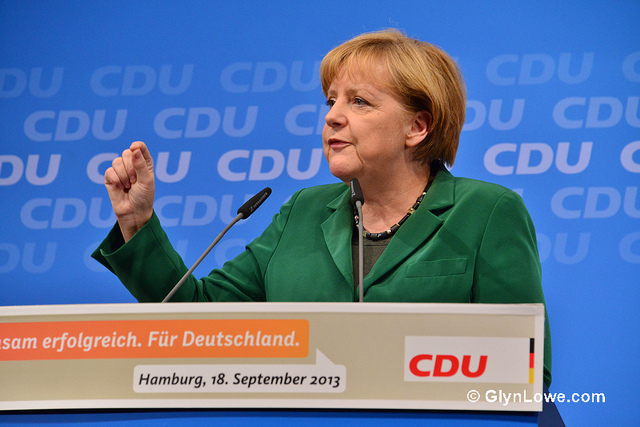
Given the pivotal importance of Germany in shaping the future CAP, it is worth paying attention to what the CDU/CSU coalition have to say about agriculture in its just announced programme for government for the German elections in September. Not least because opinion polls currently suggest that Merkel will succeed in her bid for re-election. Among other issues, there are commitments to maintain direct payments after 2020 (though no commitment to seek any particular size of the CAP budget), to maintain the two-pillar structure of the CAP, to improve the crisis instruments at the disposal of the Commission and a preference to compensate for biodiversity loss arising from agricultural production through financial compensation rather than land set-aside (though how this might work in practice is not spelled out). Below is my rough translation of the agricultural section of the CDU/CSU programme for government.

Agriculture has a future

Agriculture, forestry and the food industry in Germany contribute greatly to economic activity, but also to the quality of life, culture and landscape management.

Read the rest

Avoiding the ‘cliff edge’: Immediate trade arrangements post-Brexit need to be given higher priority in Article 50 negotiations

The European Union, under the Commission’s lead negotiator Michel Barnier, has proposed to begin Brexit negotiations with the United Kingdom on June 19th next following the latter’s general election. Based on the European Council’s guidelines on the EU’s objectives for these negotiations, detailed negotiating directives have been agreed by the General Affairs Council. The Commission’s Task Force on the Article 50 of the Treaty of the European Union (TEU) negotiations has also begun to prepare draft position papers, beginning with two on essential principles of citizens’ rights and essential principles on financial services.
This level of preparedness on the EU side for the forthcoming negotiations contrasts sharply with the impressions we have of the UK side. Until the outcome of the general election is known and new ministerial appointments are made or old ones confirmed, we will not be sure who will even be leading the UK side in the negotiations.… Read the rest

EU farm incomes in 2016

It is frequently asserted in Brussels agricultural policy discussions that European farmers over the past few years are barely surviving, buffeted by unprecedented price collapses, the unwillingness of supermarkets to pay decent prices, the closure of external markets and tightening regulations. Commissioner Hogan spent much of the first half of his term of office bringing forward one emergency financial package after the other as taxpayers pumped more money into a sector supposedly on its last legs.
This picture of an industry in crisis is naturally promoted by the well-oiled publicity machine maintained by the farm lobbies in Brussels and national capitals. But is it true? In this post, we examine the statistics on farm income trends to investigate this issue.
Eurostat produces the official figures on farm incomes in the EU. Preliminary estimates for 2016 (the first forecast) should be released towards the end of December of the relevant year, with the second updated forecast released the following March.… Read the rest

What the UK Conservative Party manifesto says about Brexit

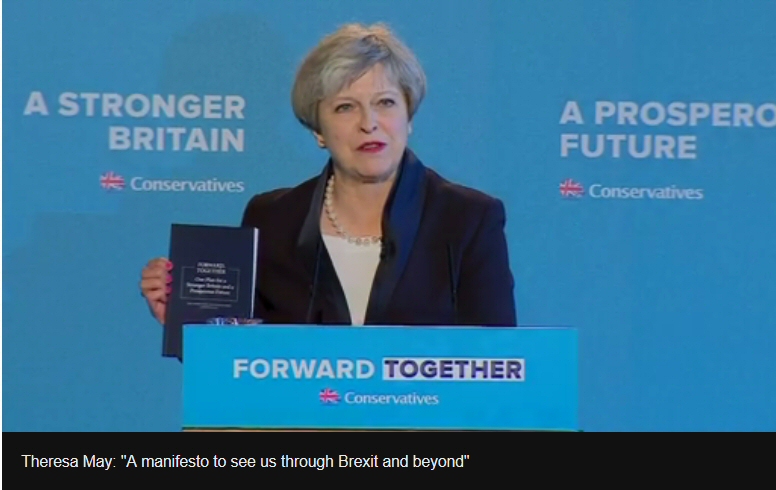
Given that Mrs Theresa May seems certain to be returned as UK Prime Minister with a greatly increased majority after the UK General Election on 8 June next, it is worth paying particular attention to what the Conservative Party manifesto which was launched yesterday has to say on Brexit issues in general and trade, immigration and agricultural issues in particular.
The manifesto actually has little new to say on these topics, with the exception of a new promise to extend agricultural support at current levels to the end of the next parliament, i.e. 2022 compared to the current commitment to maintain support at current levels to 2020. Given that EU agricultural spending may well be reduced in the next Multiannual Financial Framework period, we could end up with the paradoxical outcome that farmers in the UK, supposedly the greatest critic of the CAP, will receive higher payments following Brexit than if the UK were to remain a member of the EU, at least for a period (though of course direct payments are only one factor in farm incomes, and changes in trade access, tariff protection and exchange rates would also need to be factored in).… Read the rest

Does capping direct payments make sense?

CAP Pillar 1 direct payments were originally introduced to compensate farmers for the reduction in intervention support prices following the MacSharry reforms in 1994. This was an important and necessary step to help farmers adjust to a new economic situation. However, assistance for adjustment should only be temporary. As the years have passed, the argument that direct payments are intended as compensation payments has become less and less credible. As result, a number of alternative rationales for the continuation of Pillar 1 direct payments have been proposed.

These payments are variously justified as addressing low farm incomes, as a necessary support for EU food security, as providing a safety net for farmers against unexpected market shocks, as compensating for higher regulatory standards and as ensuring more sustainable management of natural resources. These are all important policy objectives, but there is little evidence that decoupled area-based payments are an effective, efficient or equitable way of achieving these objectives (these arguments are spelled out more fully in my recent paper for the RISE Foundation).… Read the rest