On Friday last, I took part in a panel discussion at the Centre for European Policy Studies in Brussels on the theme “Will there be a mid-term review in 2017? And, if so, what should it do?” My contribution focused on the timing and procedural issues which will influence the prospect of a substantive early review of the CAP basic acts. Other speakers on the panel (Allan Buckwell from IEEP, Rolf Moehler formerly of DG AGRI and Paolo de Castro MEP from the Socialists and Democrats Group in the European Parliament) addressed what the contents of such a review might or should be.
The purpose of the event was to formally launch the book The Political Economy of the 2014-2020 Common Agricultural Policy: an Imperfect Storm which has been edited by Johann Swinnen and published by CEPS together with Rowman & Littlefield International. This book is a fascinating series of essays on the story behind the 2013 reform but also includes three chapters looking ahead to the future by three of Friday’s panellists, including one which I contributed.… Read the rest
The CAP and biodiversity
Two weeks ago I gave a talk at a biodiversity conference organised by Teagasc, the Irish Agriculture and Food Development Authority. The proceedings of this conference can be downloaded here. The title for my talk was ‘Could European agricultural policy do more to promote biodiversity?‘ In today’s edition of the Irish Farming Independent I have a short article which summarizes the talk. I reproduce the article below and also the presentation accompanying the talk.
***********************************************************************************
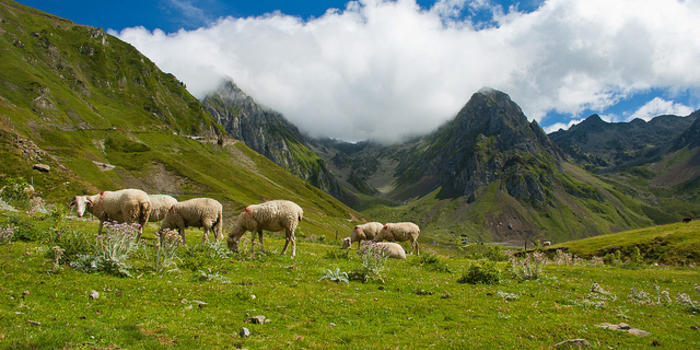
The 2013 CAP reform had three overall objectives: viable food production; sustainable management of natural resources and climate action; and balanced territorial development. The emphasis on sustainable management in the second objective was a response to the growing awareness that the twin issues of land abandonment and agricultural intensification lead to severe environmental problems which required an EU policy response.
Among these environmental problems is the growing loss of farmland biodiversity. The recent mid-term review of the EU’s 2020 Biodiversity Strategy concluded that the EU was making no progress towards its target to bring about a measurable improvement in the conservation status of species and habitats that depend on or are affected by agriculture.… Read the rest
The intervention logic of the CAP
One of the innovations in the 2013 revision of the CAP Basic Acts was to extend a formal system of monitoring and evaluation of the CAP’s performance beyond Pillar 2 rural development, where it had been long-established, to also cover Pillar 1 direct payments and market management. This Common Monitoring and Evaluation Framework (CMEF) was set out in Article 110 of the Horizontal Regulation. This requires the Commission to measure and assess the combined impact of all CAP instruments in relation to three common objectives set out in this Article.
The three objectives set out for the CAP (which essentially ‘reinterpret’ the objectives contained in Article 39 of the Lisbon Treaty) are:
• viable food production, with a focus on agricultural income, agricultural productivity and price stability;
• sustainable management of natural resources and climate action, with a focus on greenhouse gas emissions, biodiversity, soil and water;
• balanced territorial development, with a focus on rural employment, growth and poverty in rural areas.… Read the rest
EU’s declining importance in agrifood trade
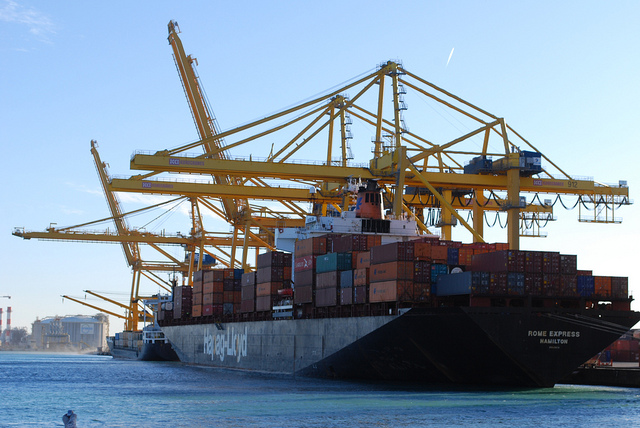
The fact that twelve countries reached agreement on the terms of the Trans-Pacific Partnership free trade area last week (albeit ratification is by no means assured) underlines the changing geography of international agrifood trade. The EU is still an important player, but it is remarkable how quickly its importance is declining as other exporters make their appearance and other import markets grow in size (see this post for a previous discussion). The table below shows the trends over the past two decades (click to enlarge).

The table shows the EU’s share of global exports and imports of agrifood products, but excluding fish (SITC 03). When trade within the EU itself (intra-EU trade) is included, then the EU accounts for 38% of world agrifood exports and imports. This represents a fall from a share of 45% of global exports and imports in the mid-1990s. On the surface, this is a relatively gentle fall over a period of nearly two decades.… Read the rest
What biodiversity benefits can we expect from EFAs?
The recent release by the Commission of its Mid-Term Review of the EU’s 2020 Biodiversity Strategy makes for sorry reading when it comes to Target 3 “To increase the contribution of agriculture and forestry to maintaining and enhancing biodiversity..”. Specifically, Target 3A dealing with agriculture had the following objective:
By 2020, maximise areas under agriculture across grasslands, arable land and permanent crops that are covered by biodiversity-related measures under the CAP so as to ensure the conservation of biodiversity and to bring about a measurable improvement in the conservation status of species and habitats that depend on or are affected by agriculture and in the provision of ecosystem services as compared to the EU 2010 Baseline, thus contributing to enhance sustainable management.
The Mid-Term Review concludes that there has been no significant progress towards this target. One indicator, illustrated in the figure below, is that there has been no measurable improvement in the status of the majority of agriculture-related species and habitats covered by EU nature legislation since the last reporting period.… Read the rest
Does farm size matter?
On October 20th next I will take part in a workshop organised by DG AGRI at the Milan EXPO on the subject “Structural realities in EU agriculture: Does farm size matter?” The aim of the workshop is to discuss the challenges and opportunities brought about by the structural change of the EU agricultural sector for a) the up- and downstream industries, b) EU rural areas and c) the sustainability of agricultural production in Europe.
The debate on farm size
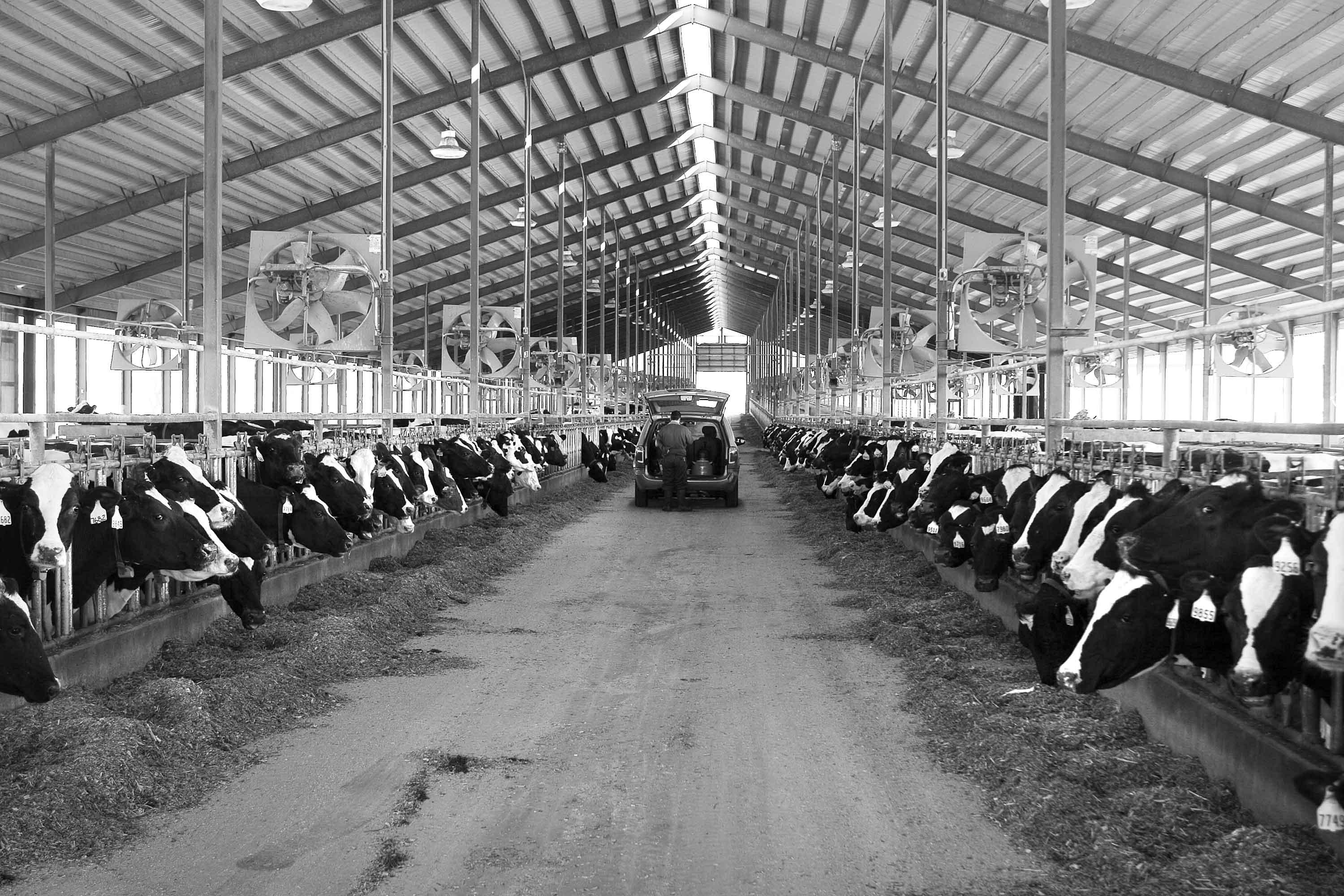
There is a long history in Europe of interest in the structure of agricultural holdings. Many European countries have had land legislation in place with the objective of maximising the number of farm holdings or limiting the maximum farm size. In recent decades, many of these restrictions have been removed, although rules limiting foreign investment in land still exist in a number of countries, particularly in the new member states. Nonetheless, the issue of farm size remains a controversial and emotional issue, as seen in the opposition to so-called ‘mega-dairies’ in a number of member states, and the introduction of the ‘redistributive payment’ option in Pillar 1 of the CAP permitting member states to make higher payments per hectare to smaller farms.… Read the rest
Informal Agricultural Council to discuss climate-smart agriculture
During the next two days (14-15 September) the Luxembourg Presidency invites agricultural ministers to an informal Council meeting which had been intended to focus on agriculture and climate change. Because of Commissioner Hogan’s absence through illness from last week’s Council meeting it seems that a good part of the meeting will be devoted to continuing discussions on the EU response to low milk prices. The time available for the discussion on how agriculture can best address the challenges of mitigating climate change will thus be curtailed.
However, the Luxembourg Presidency has prepared a very useful background paper intended to set the scene for discussions between the Ministers in three working groups. This paper, entitled Towards Climate-Smart Agriculture, does a very good job in setting out the context and in describing some of the options open in moving to a climate-smart agriculture.
What the Presidency paper on climate-smart agriculture does not discuss
However, there are a few striking omissions in the Presidency paper.… Read the rest
€500 million farm aid package announced
The farm aid package announced by the Commission (in the form of Vice-President Jyrki Katainen in the absence of Commissioner Hogan due to illness) at the extraordinary Agriculture Council yesterday exceeded the expectations raised by the Presidency background paper in a number of respects (the elements of which related to dairying I discussed in this post), but fell short of what some Ministers had sought and what the farm organisations deemed satisfactory. The Council’s conclusions can be accessed here.
In my view, the package is a measured response to the difficulties in some specific farm sectors and, indeed, the Commissioner has held his nerve in the face of demonstrations and protests. However, further discussions will continue at the end of this week and at the informal Agricultural Council next week (14-15 September) which otherwise will focus on agriculture and climate. These are intended to address some of the practical implementation questions raised by the Commission’s proposals but the issue of raising the intervention price for dairy products may still not be finally settled.… Read the rest
Is the producer price of milk too low?
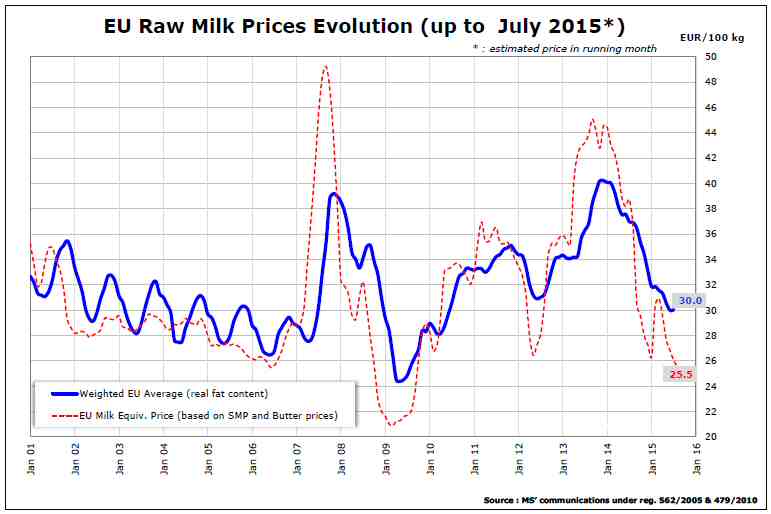
How serious is the current dairy market situation? Are prices really below costs of production? In this post, I examine recent dairy market trends to throw light on these questions. The Agriculture Council meeting tomorrow (see this post for a preview) is expected to agree a package of aid for dairy farmers, but why should this be necessary? The Milk Market Observatory now provides detailed and up-to-date information on milk market trends and I make extensive use of its data and charts in this post.
What is happening to milk prices?

The trend in milk prices shown in the chart above can be divided into two periods: a downward trend in the years to 2007 (driven by the reduction in intervention prices and export subsidies due to CAP reform), and an upward trend since then but with great volatility. The peak price was reached in Nov-Dec 2013 when the weighted EU average milk price reached €40.21/100 kg.… Read the rest
Hold your nerve, Commissioner!
An extraordinary meeting of the Agriculture Council will be held tomorrow Monday 7 September to discuss the difficult situation on agricultural markets. The Luxembourg Presidency has floated a number of ideas for discussion to address problems in the dairy, pork and fruit and vegetable markets, and the Commissioner is expected to table a package of measures.
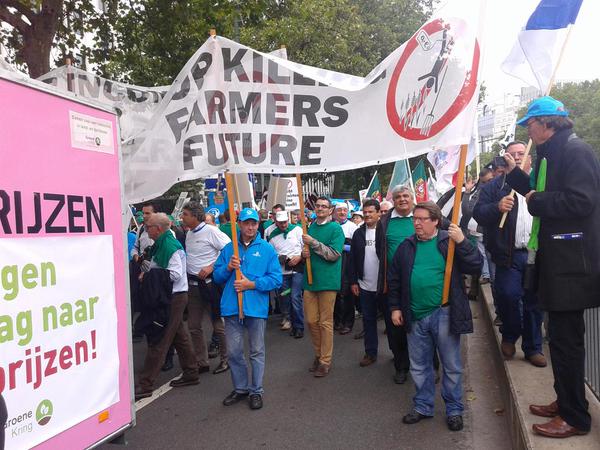
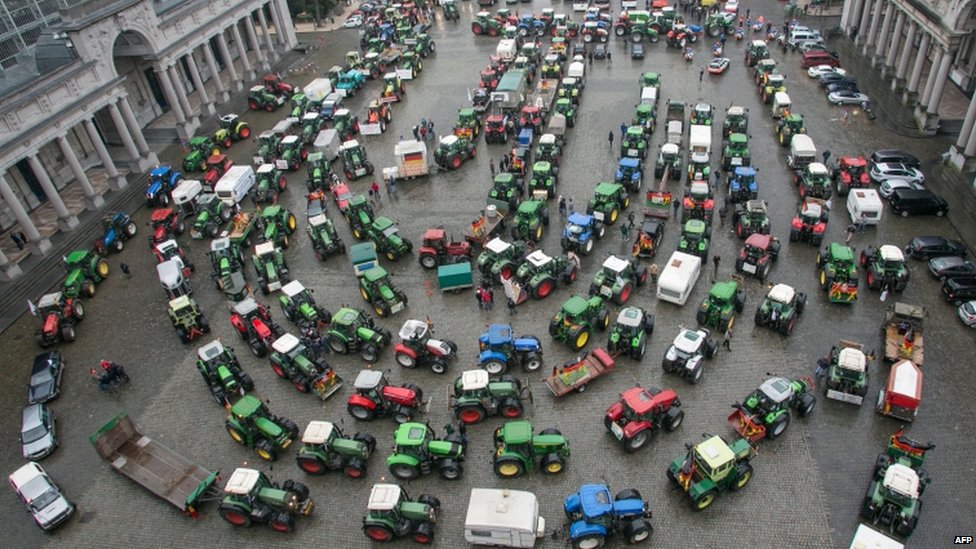
Farmers will be out in force in Brussels to make their case for further assistance to the sector. In this post, I look at the options being discussed to address the dairy situation in particular. In a separate post, I examine the background to the milk market situation to explain why farmers will be protesting in Brussels tomorrow.
The Presidency proposals of particular relevance to dairy farmers include:
• Returning “at least part of the funds collected by way of the 2014/15 milk super levy to the sector to ease its situation”.
• Enhancing promotion measures
• Extending safety net measures such as private storage aids
• Temporarily increasing the intervention price for dairy products.… Read the rest