


How the new MFF architecture and the NRPP could redefine design, delivery and decisions in EU farm policy
This guest post is written by Emil Erjavec, Professor of Agricultural Policy and Economics at the University of Ljubljana, Slovenia. Professor Erjavec is a member of the Tools4CAP Coordination and Support project within the Horizon Europe programme supporting the design and monitoring of the national CAP Strategic Plans 2023-2027 and laying the foundations for a sound preparation of post-2027 Strategic Plans.
The storm sparked in July by the European Commission’s proposal for the next Multiannual Financial Framework (MFF) and its reorganization of the Common Agricultural Policy (CAP) has now subsided, at least publicly. Some calm may reflect efforts by the Commission President to placate the European Parliament – reportedly by setting aside 10% of the National and Regional Partnership Plan (NRPP) envelope outside of the earmarked amounts for the CAP and CFP for rural development in addition to the ring-fencing already promised for CAP income support. Behind the scenes, however, preparations for the MFF negotiations continue apace. Denmark’s presidency MFF negotiating box has set an initial frame, and the caravan moves on.
Many MEPs, national officials and most agricultural NGOs still call for a two-pillar CAP and warn of a likely significant cut in agricultural funding. That claim is only partly right – or, more precisely, hard to assume because of the greater discretion for Member States. A ring-fenced share for the “narrow” (income) part of the CAP, together with additional funding channels for wider rural measures, could still yield a solid overall envelope. The decisive factor will be how each country sets its priorities when drafting its NRPP.
If the EU wants the new financing method and scope in force by 2028, the MFF deal needs to be concluded by the end of 2026, or, after the usual drama that unfolds every time in MFF negotiations between net contributors and net recipients, no later than February 2027. That leaves very little time to prepare each NRPP. The proposed Single Fund and the merging of traditional EU policies, primarily cohesion, CAP and home affairs, will demand a fresh strategic formulation of CAP priorities and interventions.
This post asks how extensive the changes will be, what dilemmas they pose for the CAP under the new institutional framework, and how difficult timely NRPP preparation may be. It examines three layers of change: (1) programming and monitoring decision makers of the CAP, (2) the strategic decision-making system, and (3) the quality and novelty of the CAP measures.
The CAP will (partly) be decided by “others”
A core change concerns who decides. The NRPP will be a single document covering all public policies co-financed from EU funds. It therefore requires comprehensive inter-ministerial coordination. Member States will organise this differently, but the “coordinating authority” is likely to sit at cabinet or general secretariat level of the government, in finance, or in the cohesion portfolio. Only in a few countries – particularly in parts of the north – might agriculture ministries lead coordination. In much of the south and east, where cohesion funding has traditionally been substantial, coordination almost certainly won’t sit with agriculture.
As programming and allocation move beyond the agricultural bubble, priorities, the choice of measures and shares of funding allocated to different priorities may shift. This prospect unsettles agricultural decision-makers and farm organisations and fuels their opposition to the NRPP model.
How much change can a different decision structure bring? Those familiar with Brussels and national capitals will recognise a traditional tension between “cohesionists” (often allied with finance ministries) and agricultural policy actors. Cohesion thinking tends to prefer larger, more urban-facing projects, and is less predisposed to agricultural exceptionalism. Behind this lies the usual political-economy dynamic in which influential actors contest project selection and resource distribution.
If cohesion and finance ministries take the lead, they will most likely dilute the primacy agriculture has enjoyed in allocating CAP funds. Historically, this was a largely intra-agricultural process, subject to Commission scrutiny. Under the NRPP, “someone else” will set or at least heavily influence policy priorities and allocate funds. There is precedent: during NextGenerationEU negotiations, which followed a similar top-down approach, the farm sector in several Member States already found itself “in the wings”.
Taking power away from one lobby is not inherently bad; it might mend the current interest-driven inconsistencies in agricultural policy. But simply swapping one interest structure for another does not guarantee better policy. The risks include lower transparency, bureaucratic drift, and weaker technical quality (see below) in decisions. In all cases, it is certain that this institutional shift will shape needs assessments, measures and CAP fund distribution.
Strategic planning under looser rules: risks and realities
The Commission proposes a simpler planning model, replacing the detailed CAP Strategic Plan template used in 2023–2027. Formal SWOT requirements have vanished; the indicator set is proposed to be simplified. The proposal suggests the following requirements: a diagnosis of needs under the CAP priority headings (income stability, generational renewal, resilience and risk management, AKIS, contribution to climate and nature, etc.); an intervention logic linking measures to those needs; the financial envelope for the CAP chapter; and milestones and targets as payment triggers, subject to horizontal conditionalities that apply to the whole CAP chapter. Monitoring would use EU-level indicators, standardising and simplifying procedures.
In short, the EC proposal does not prescribe a fixed complement of plan elements, but offers a looser structure. That flexibility risks inconsistencies and divergent interpretations, potentially undermining policy quality. It also leaves open how the process will work in practice.
Two planning styles are likely to emerge, depending on national rules and coordination: a more cohesion-style, “one objective – one instrument” approach (à la Tinbergen), and a broader CAP approach, listing general priorities and then presenting multiple interventions linked to several objectives. The first implies re-engineering the measures portfolio, which is hard to do within tight deadlines and given path dependency which is very present in the CAP arena. The second adapts the current CAP logic to the NRPP, probably what DG AGRI prefers, while DG BUDG and DG REGIO are more inclined to a simplified, streamlined mapping.
In reality, the dilemma is partly artificial. CAP objectives have never been unambiguous; they are purposely general to allow broad interpretation. And interventions typically serve multiple priorities. The nature of the principal CAP tools, direct payments, investment aid, etc., preserved once again, makes one-to-one mapping unrealistic.
If the choice of approach is left to Member States, planning will be very challenging in some. The simple “priority – instrument” model requires major policy surgery; the looser model largely preserves current practice. Given time pressure, DG AGRI can be expected to codify a moderated version of today’s CAP planning logic through guidance, slightly simplified but recognisable.
Even then, administrations, especially in parts of the east and south, will struggle with writing the plan on time. For a timely 2028 start, quality and participation may suffer. Based on NGEU experience, top-down drafting often produced weaknesses. Without a genuine evidence base and debate, innovative measures are unlikely to appear at speed.
The Commission is reportedly preparing country-specific guidelines as part of the proposed steering mechanism, a way to defend Union priorities, but no team of officials can fully capture national specifics. The right answer is more evidence-based design, greater transparency and systematic use of science. A few Member States may go in that direction; most likely, most will not.
Have we missed the window for better measures?
With pillars abolished and measure menus simplified, Member States’ scope for manoeuvring increases, but so does complexity in drafting. In substance, most measures remain similar (and more would become mandatory), so the question is how much manoeuvring is feasible.
Two broad classes emerge: ring-fenced CAP measures (the broader income family, which even includes agri-environmental measures), and a smaller set outside the ring-fence (notably LEADER, knowledge and innovation such as support for AKIS/EIP, and school schemes), which must be financed from the funds that are not ring-fenced.
Two dilemmas follow. First, how to reshape the ring-fenced measures. Second, how to win resources from the common pool for wider rural priorities. Time pressure and path dependency suggest continuity of the content and scope of current measures, with country-specific tweaks. Some governments (the Netherlands is often cited) may reduce broad direct payments and favour payments tied to measurable environmental outcomes. Elsewhere, expect a push to “cut red tape”, which often actually means dialling down climate and environmental ambition.
The Commission is likely to use its guidelines to shape Member States’ early drafts where they do not adequately reflect the obligations set out in the proposed CAP regulation to address Union-wide climate and environmental needs. Securing subsequent changes to programme documents at the Commission’s request is likely to prove challenging, particularly in countries that strongly adhere to a production-oriented narrative.
Given limited time, scarce debate on transforming the CAP in the Member states, and few fully tested thoroughly improved or even completely new measures, major leaps are unlikely. Designing good instruments, building consensus and setting workable implementation takes time.
A further challenge arises in countries with strong Cohesion Policy traditions: agricultural stakeholders may struggle to secure rural funding outside any earmarked share, even if a 10% ring-fence for rural development is ultimately enacted. Methodological issues may also emerge regarding how rural expenditure is tracked and attributed. Strong resistance from Cohesion Policy advocates is likely if established delivery models and funding allocations are altered. In principle, an effective rural policy requires cross-ministerial engagement; in practice, the Commission’s laudable vision of an integrated approach will collide with domestic political realities.
Anyone expecting smooth alignment within governments will be disappointed. On climate, livestock, food and public health, and farm incomes, views differ sharply. Regulation vs incentives? Either way, farmer buy-in, credible strategy and delivery capacity matter. The new CAP planning framework changes bargaining terms, is technically and politically demanding, and will consume time, risking delays and thin content.
What outcome should we expect?
Barring major shocks (e.g., turnaround jn French politics or a further rightward shift at EU level), the basic architecture proposed by Commission is more likely than not to survive. Rejecting the MFF would take the EU to the brink. Because of this, we can expect:
- The Single Fund and NRPP will likely remain.
- The CAP will stay inside this frame, with possibly more planning freedom under a regime with relaxed demands for selecting objectives and instruments.
- Rural priorities will face tight resources and will need to draw from the broader pool of funds otherwise earmarked largely for cohesion.
The NRPP institutional framework may be predictable, but national choices on measures and allocations are not, especially under severe time pressure. In several countries, political imperatives will force the adoption of NRPPs and the new CAP at any cost, to secure EU money, leaving little room for innovation. Path dependency will prevail; the “music” will sound familiar even if the director and orchestra change.
We can expect the trend already visible today to intensify, widening disparities between countries, resulting in very divergent emphases within the CAP, not always because of different structural needs, but because of different political priorities. Meanwhile, the big questions, how the CAP contributes to climate and biodiversity, the future of livestock, the prospects for young and small/remote farmers, will remain only half-answered. Dissatisfaction will not vanish. The main difference is that Member States will now carry more responsibility for better policy and progress, while EU institutions bear a little less.
This post was written by Emil Erjavec.
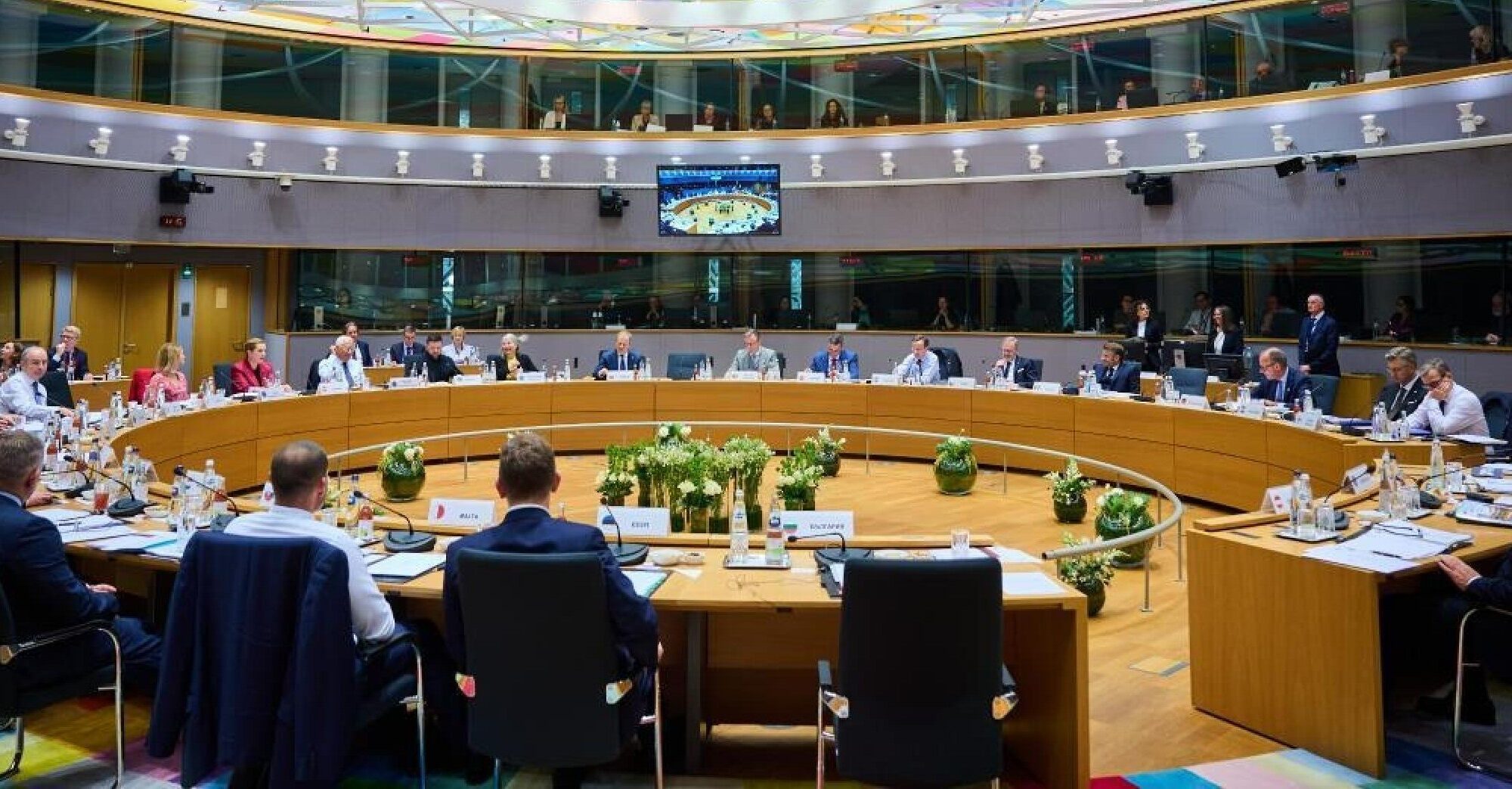
Photo credit: Council of the European Union, reproduced under a Creative Commons Attribution 4.0 International (CC BY 4.0) licence.

Today, on 20 February 2026, Portugal faces the harsh reality of climate change, exacerbated by recent storms, while the European Union draws up its next Multiannual Financial Framework, including the reform of the future Common Agricultural Policy (CAP). In this context, the severe impact caused by these storms, particularly on the agroforestry sector, together with the current geopolitical uncertainty, has “inspired” the title of the following reflection:
“CAP Reform 2028-2034: Aligning Environmental Ambition, Competitiveness and Resilience”
The European Union is now facing a strategic choice. Four years on, the war in Ukraine has shown that food security can become a geopolitical vulnerability.
In this new context, global competition has intensified and the reform of the Common Agricultural Policy, within the scope of the next Multiannual Financial Framework 2028-2034, is taking place in a context that is structurally different from the previous cycle.
Since 2022, three variables have significantly altered the framework of European agricultural policy:
1. Increased volatility in agricultural and input markets.
2. Intensification of extreme weather events with a direct impact on productivity and rural stability.
3. Increased competitive pressure as a result of international regulatory asymmetries.
In this scenario, the central issue is not to reduce environmental ambition, but to ensure strategic coherence between:
• Climate objectives
• Economic sustainability of farms
• External competitiveness
• Systemic resilience
My thinking is based on an operational hypothesis:
The current architecture of agri-environmental instruments may generate tensions between environmental performance and relative competitiveness if it is not accompanied by adequate compensatory mechanisms.
Specifically, I identify three critical areas for DG AGRI:
1. Eco-schemes and incentive structure
It would be necessary to assess:
• Whether eco-schemes are inducing productive innovation or merely formal compliance.
• The real impact on total factor productivity.
• The heterogeneity of implementation between Member States.
It might be advisable to introduce harmonised metrics for sustainable productive performance, linking payments to measurable gains in environmental and economic efficiency.
2. Climate risk management
The increasing frequency of extreme events puts additional pressure on:
• Agricultural yields
• Market stability
• Insurance and mutualisation instruments
One suggestion is to strengthen risk management instruments in Pillar II and assess the feasibility of a specific European agro-climatic resilience mechanism with objective activation criteria.
3. Competitiveness and regulatory asymmetry
The internalisation of additional environmental costs in the EU, without equivalent trade mechanisms, may affect the relative competitiveness of the sector.
It would be essential to strengthen the coordination between:
• Agricultural policy
• Trade policy
• External conditionality instruments
Particular attention should be paid to consistency between the CAP and the trade agreements under negotiation, including the EU-Mercosur and EU-India agreements.
This reflection also proposes the development of a complementary analytical instrument:
‘Strategic Agri-Environmental Resilience Index’
This index would integrate:
• Dependence on external inputs
• Sustainable productivity
• Climate exposure
• Agri-food trade balance
• Relative regulatory intensity
The aim would be to support budgetary decisions based on international comparative evidence.
In summary,
The CAP 2028-2034 should evolve from a predominantly redistributive logic to a logic of:
• Strategic investment
• Productive resilience
• Sustainable competitiveness
The European Union’s environmental ambition should be accompanied by instruments that can guarantee:
• International competitive neutrality
• Economic sustainability of farms
• Ability to absorb climate shocks
To conclude this humble reflection, I believe that the current moment calls for structural alignment between climate, agriculture and economic strategy. In this context, the reform of the Common Agricultural Policy and the next Multiannual Financial Framework are not mere budgetary instruments, but rather ‘instruments of power…’
Yours sincerely,
José Manuel A. A. Barata
“Technician at the Ministry of Agriculture and son of a farmer”
Portugal – Lisbon, 20 February 2026