Following the negotiations on the Direct Payments Regulation

COMAGRI will vote on compromise amendments to the Commission’s proposals for the four main CAP regulations this week. To understand the dynamics of the legislative process, it is helpful to be able to see the positions of the main institutions side-by-side. I have constructed a four-column spreadsheet table showing, article by article, the positions of the main actors as we know them to date for the direct payments regulation (download the file to your computer by clicking File, Download in the upper left of the Google Drive document when the link opens). The four columns show, for each article:

    The Commission’s proposal October 2011
    The COMAGRI rapporteur’s amendments May 2012
    The Council’s position as summarised in the Cyprus Presidency document December 2012
    The COMAGRI compromise amendments Jan 2013

I have only had the time to construct this table for the direct payments regulation so far. There may be readers who have already done this exercise for the other regulations and, if you are prepared to share the table, I would be happy to post it on this site with attribution.… Read the rest


Forum on CAP reform

I did not get time before Christmas to draw attention to the Forum on the Common Agricultural Policy after 2013, a series of articles on the CAP reform process published in the Nov/Dec issue of Intereconomics. This is a review of European economic policy published jointly by the Centre for European Policy Studies and the Leibniz Information Centre for Economics. I contributed one of the articles, and the contributions of my colleagues are uniformly excellent even if they take different views on some of the main issues.
The full list of contents is as follows:
Jean-Christophe Bureau Where is the Common Agricultural Policy heading?
Stefan Tangermann CAP reform and the future of direct payments
Alan Matthews Greening the Common Agricultural Policy post-2013
Davide Viaggi Rural development in the post-2013 CAP: huge opportunity or devil in the details?
Christophe Crombez, Louise Knops and Johan Swinnen Reform of the Common Agricultural Policy under the co-decision procedure
Jean-Christophe Bureau accepts that the Commission’s reform proposal does not address the most fundamental criticisms of the CAP including the unwanted effects of direct payments and the lack of targeting of the budget on public goods.… Read the rest

Cyprus Presidency progress report on CAP reform – direct payment controversies

When the Agricultural Council meets tomorrow and Wednesday (18-19 December) it will discuss the Cyprus Presidency’s progress report on CAP reform. As the first day of the December Council is devoted to the annual bargaining over fish quotas, this report will be presented in a public session (with web streaming) on the morning of Wednesday 19th.

The progress report is drawn up by the Presidency on its own initiative and summarises the main amendments to the four main CAP regulations as well as outstanding issues which are left for the Irish Presidency to resolve. As it is highly unlikely that the Irish Presidency will revisit issues unless they are expressly identified as unresolved (in square brackets), the progress report and the accompanying amended draft regulations give us a good idea of the evolution of the Council’s thinking since the end of the Danish Presidency last June.
In addition to the progress report, the latest drafts of the four regulations can be downloaded using the following links.… Read the rest

Council debate on greening raises more questions than answers

Watching the videostream of the Agricultural Council’s greening debate held earlier this week was a rather depressing experience. There is something profoundly wrong with a decision-making system where food and agricultural policy is determined solely by agricultural ministers who speak on behalf of their farmers only, with only the Commission present to even vaguely represent the other interests who have a legitimate right to be heard, including taxpayers, environmentalists and those interested in the impact of EU policies on developing countries

At least in the Parliament, despite the enormous power of COMAGRI under the Parliament’s rules of procedure, final decisions are taken in plenary session where all interests (with the possible exception of taxpayers, as the Parliament does not face an effective budget constraint) are represented. And membership of COMAGRI is in principle open to all MEPs even if in practice it is heavily dominated by farming representatives.

Farmers, of course, have a perfect right to have their views heard and their interests taken into account.… Read the rest

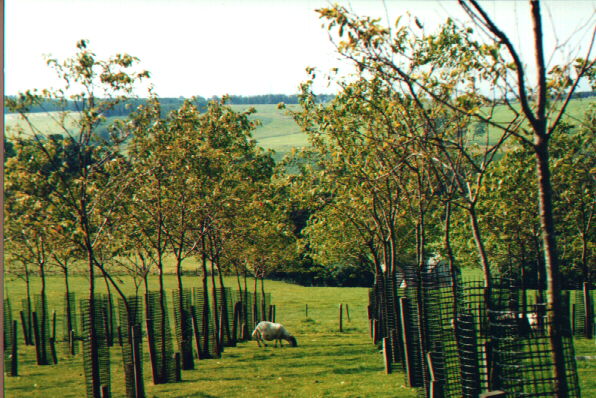
What potential agroforestry holds for the future CAP?

More than 80 policy makers, farmer’s representatives, NGOs and scientists got together on Wednesday this week in the European Parliament in Brussels to discuss the potential agroforestry holds for the future CAP. The event, entitled “Agroforestry: Trees for a Sustainable European Agriculture”, was organised and chaired by MEP Gaston Franco with the aim of promoting and supporting agroforestry at the European level. The programme (see agenda and presentations here) has brought together many speakers with various backgrounds and perspectives, resulting in a demonstration of a diverse and sophisticated picture of the field.

Agroforestry combines production and environmental protection in an innovative way, said Alain Canet – President of the French Agroforestry Association. It allows optimising the use of natural resources and produces biomass and biodiversity as well as it “offers innovative solutions to modern challenges of rural development,” argued Christian Dupraz, Researcher and President of the European Agroforestry Federation (EURAF).… Read the rest

Farmer-friendly ideas on greening

COPA-COGECA leaders are currently presenting their new detailed position on greening and green growth at the Congress of European Farmers, organised in Budapest on October 1?3, 2012. The theme of the Congress  is “The Future Common Agricultural Policy (CAP): How European Farmers can ensure Food Security Innovatively and Profitably”.

COPA-COGECA is largely against the greening proposals tabled by the Commission last year, saying that they make farmers do a lot more for less money, thereby leading to higher costs, higher food prices and more dependence on imports. They would also increase bureaucracy, of course. Therefore, the farmers’ organisation produced a list of six alternative measures to tackle the problem of greening in a farmer-friendly way: crop diversification (of rotated crops), a certification scheme (food), permanent grasses, replacement of EFAs by uncultivated land, break crops, protein crops.

These items, serving as an extended list of greening measures for farmers, reflects the diverse nature of European agriculture and allowing farmers to make choices more flexibly, based on their own farm situation – says COPA-COGECA.… Read the rest

Further thoughts on CAP greening

Kaley Hart (of the IEEP) and Jonathan Little (on secondment to the European Parliament’s secretariat) have just published a paper which provides a useful summary of the first round of the CAP greening debate over the past 12 months. They argue that, in relation to the individual greening measures, each has a range of potential benefits as well as a set of issues which may serve to constrain this potential. They note that the perceived added cost and bureaucracy involved with green direct payments has been a common theme of the public debates within the Agriculture Council.

The second part of their paper compares the relative merits of different alternative options to the Commission’s proposals. They conclude:

What is clear from this analysis is that there is no perfect alternative approach to greening the CAP, with any choice inevitably involving compromises. The amount of additional benefits delivered from the scale of investment in greening is clearly of paramount importance from an environmental perspective, however, a trade-off has to be made between environmental additionality and administrative simplicity.

Read the rest

Paper on CAP greening

I presented a paper at a seminar of the European Association of Agricultural Economists today which reviews the debate on greening the CAP in Pillar 1 in the light of the Commission’s original legislative proposal, the discussions in the Council summarised in the Danish Presidency’s progress report this month, and the COMAGRI rapporteurs’ reports.
The message of the paper is that the greening proposals under discussion are a missed opportunity. They serve primarily to try to justify the continuation of the existing level of Pillar 1 direct payments. The Commission’s original proposals for three simple, generalisable measures would lead to limited additional environmental benefits, and the various flexibilities proposed by the Council and COMAGRI rapporteurs would reduce the additional benefits even further.
The main changes sought by the Council and COMAGRI rapporteur would make greening in Pillar 1 voluntary, would provide a range of options by which farmers could claim eligibility, and would greatly complicate the adminstration of Pillar 1, running completely counter to member states’ desire for greater simplicity.… Read the rest

Delivering environmental benefits through agri-environment schemes

Downloaded from http://www.flickr.com/photos/13847552@N03/3906560447/ under Creative Commons licence

The ‘big idea’ in the Commission’s legislative proposals for the reform of the CAP post-2013 is greening, to be implemented by requiring all farmers in receipt of the basic payment to adopt three measures – crop diversification, ecological focus areas and the maintenance of permanent pasture – as appropriate. While there is a broad acceptance that the CAP should focus more on environmental objectives, there is still huge debate on the size of this shift and on the efficacy and relevance of the Commission’s proposals.
One of the main criticisms from member states has been the inflexibility of the proposals which are designed in a ‘one size fits all’ manner (for example, see the recent speech by UK Minister Caroline Spelman on the Commission’s greening proposals). Member states are seeking greater flexibility in the greening practices to be implemented, either in the form of a menu approach or through automatic qualification of farms following approved management practices as in organic farming, the so-called ‘green by definition’ approach.… Read the rest

The cost of flat-rate agri-environmental measures

The Commission’s proposals to require shallow, one-size-fits-all, green measures across the EU as a whole in return for a green payment in Pillar 1 have been widely criticised as overly prescriptive, yielding limited environmental benefits (‘greenwash’), administratively complicated for member states and unnecessarily costly in terms of the trade-off with food production.

I reviewed these criticisms in a recent note for the European Parliament’s COMAGRI (link to appear when the note is published shortly). In the note I favoured a continuation of the past CAP reform trajectory in which a larger share of the CAP budget would be shifted to Pillar 2 in order to allow more ambitious and targeted agri-environmental measures (AEM). The apparent unwillingness of the Council of Ministers to countenance a larger Pillar 2 budget (presumably because of the difficulties created by the need for co-financing as well as due to political opposition from farm groups) is the biggest political obstacle to this approach.… Read the rest