Institutional Reform Will Shape the Next CAP

How the new MFF architecture and the NRPP could redefine design, delivery and decisions in EU farm policy

This guest post is written by Emil Erjavec, Professor of Agricultural Policy and Economics at the University of Ljubljana, Slovenia. Professor Erjavec is a member of the Tools4CAP Coordination and Support project within the Horizon Europe programme supporting the design and monitoring of the national CAP Strategic Plans 2023-2027 and laying the foundations for a sound preparation of post-2027 Strategic Plans.

The storm sparked in July by the European Commission’s proposal for the next Multiannual Financial Framework (MFF) and its reorganization of the Common Agricultural Policy (CAP) has now subsided, at least publicly. Some calm may reflect efforts by the Commission President to placate the European Parliament – reportedly by setting aside 10% of the National and Regional Partnership Plan (NRPP) envelope outside of the earmarked amounts for the CAP and CFP for rural development in addition to the ring-fencing already promised for CAP income support.… Read the rest

European Parliament votes on CAP simplification and strengthening farmers’ position in the food supply chain

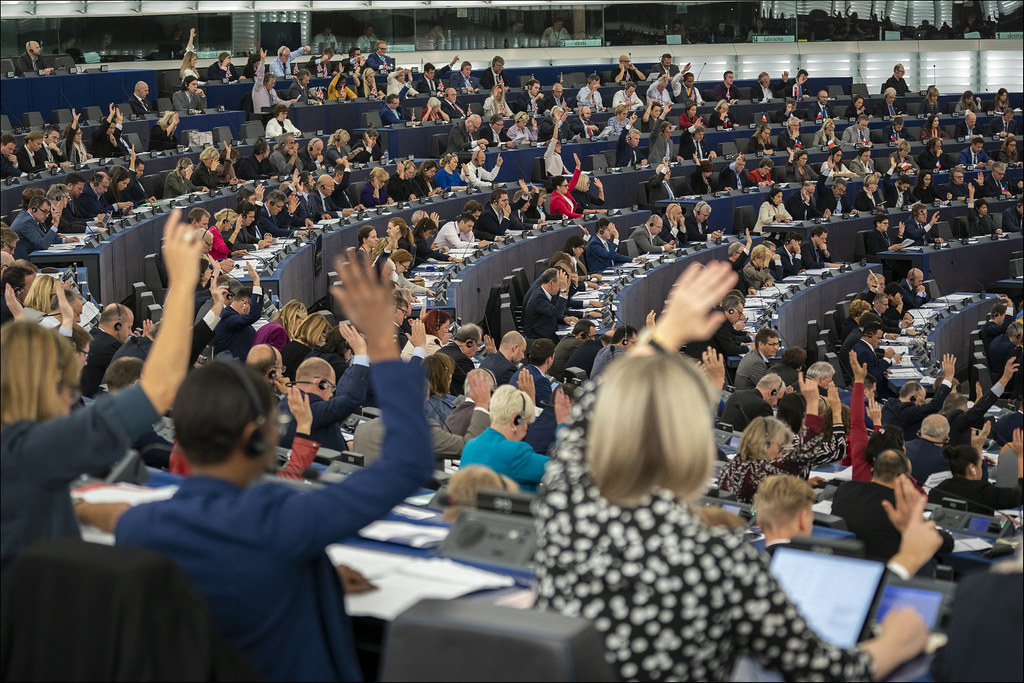
The European Parliament voted today to determine its position on two amending pieces of legislation proposed by the Commission that can significantly modify rules for Member States and farmers in the remaining years of the current CAP. One is the Omnibus Simplification Regulation COM (2025) 236 amending the CAP Strategic Plans Regulation 2021/2115 and the Common Market Organisation (CMO) Regulation 1308/2013, while the other is the proposal COM (2024) 577 to amend the CMO Regulation and some aspects of the Strategic Plans Regulation to strengthen farmers’ position in the food supply chain.

The context for these two proposals is, firstly, the general shift in Commission priorities to boost competitiveness, innovation and growth in the wake of the Draghi report. This report called for increased investment in innovation, a stronger Single Market through market integration, a greater focus on resilience and strategic autonomy for critical sectors like energy and raw materials, as well as a more supportive business environment by reducing regulatory burdens.… Read the rest

How to advance the green transition in the next CAP post 2027

Even though the latest changes in the CAP regulations only came into force on 1 January this year, attention is already beginning to focus on potential further changes to the CAP after the end of the current programming period 2023-2027. The Commissioner for Agriculture Janusz Wojciechowski started the ball rolling back in June. In his contribution to the European Parliament debate on the Mortler Report on ensuring food security and long-term resilience of EU agriculture which, inter alia, called on the Commission to present a holistic plan to ensure food security for the EU, he commented:

I am in full agreement with this. We need a plan presented by the Commission to ensure food security in the European Union, a plan that also takes into account the role of the European Union in global food security. This will also be a plan for elements of the Common Agricultural Policy after 2027, and I intend to prepare and present such a plan in the coming months, certainly still in 2023.… Read the rest

Agriculture in the European Green Deal: From Ambition to Action

Today I had the pleasure of contributing to a panel discussion on the European Green Deal at the annual DG AGRI workshop on the medium-term outlook for EU agricultural markets, income and environment. This post consists of a slightly extended version of my remarks.

The European Green Deal is a growth strategy that aims to transform the EU into a prosperous, fair, competitive and resource-efficient economy, with no net emissions of greenhouse gases by 2050, zero pollution and a decoupling of economic growth from resource use. It is also a response to urgent challenges.

Despite progress in some areas, many trends in the farm and food sectors are going in the wrong direction. We are not on target to meet the 2030 Sustainable Development Goals relevant to food systems.

  • Agricultural emissions of greenhouse gases are rising and Member State projections to 2030 show little sign of improvement
  • Ammonia emissions are rising, posing a challenge in meeting air pollution limits
  • The gross nitrogen balance improved between 2000 and 2010 but there has been no further improvement up to 2015.
Read the rest

CAP Transition Provisions 2021 Regulation delayed

In June 2020 the Council and COMAGRI negotiators reached a partial provisional political agreement on all essential aspects of the Commission draft Regulation extending the CAP provisions beyond 2020 (I discussed the Commission’s draft Regulation in this post). This followed a decision by COMAGRI to enter into negotiations with the Council without first seeking a Parliamentary first reading position on the basis of its legislative report on the draft Regulation agreed in May 2020. While most of the provisions of the CAP direct payments regulation would apply as long as that regulation remains in force, the transition regulation is necessary to provide a legislative basis for other CAP spending after 1 January 2021.

It had been intended that this political agreement would have been brought to the Parliament plenary taking place this week for a first reading/single reading approval. This did not happen. Instead, the transition regulation has got caught in the crossfire of various political disagreements.… Read the rest

Keep an eye on coupled income support

Much attention is rightly focused on the changes that the co-legislature (Council  and Parliament) might make to the Commission’s proposed green architecture in the next iteration of the CAP (see contributions from Lakner and Pe’er and ARC2020 as well as my earlier post). There are also other elements in the proposed CAP framework with potentially important implications for production and environmental outcomes. In this post I focus on the proposals for one of the more production-distorting elements, namely, coupled income support.

The background

The conditions governing what is called ‘voluntary coupled support’ (VCS) in the current CAP and what the Commission has relabelled ‘coupled income support’ in its May 2018 proposal for the next CAP have been gradually relaxed in the current CAP period (I have previously described in earlier posts the changes made in the 2013 CAP reform and the changes introduced in the Omnibus Regulation). They would be further relaxed under the Commission’s proposal.… Read the rest

German Presidency pursues lowest common denominator on future CAP green architecture

The German Presidency of the AGRIFISH Council posted a background note on 3 September 2020 on the green ambition of the future CAP prepared for a meeting of the Special Committee on Agriculture on 7 September. This follows a background paper on the green architecture of the CAP that it prepared in early July shortly after it assumed the Council Presidency. This was intended to steer discussion at the July AGRIFISH Council meeting and raised questions specifically around eco-schemes and setting a minimum share of non-productive land that might be required as part of conditionality.

These documents build on, and in some aspects amend, the work of the Croatian Presidency in the first half of the year. The legacy of the Croatian Presidency is summarised in its progress report circulated to the June AGRIFISH Council and in its consolidated version of the revised drafting suggestions for the three legal acts that make up the CAP reform package.… Read the rest

Reflections of CAP strategic planning in times of corona

We are pleased to welcome this guest post from Emil Erjavec, Professor of Agricultural Economics and Policy, University of Ljubljana, Slovenia.

The current pause in the ‘normal’ functioning of mankind and the European Union in general offers an opportunity to reconsider the functioning of institutions and design of public policies. The battle with the SARS-CoV-2 virus and its associated COVID-19 disease has brought to the forefront the importance of employing knowledge and an evidence-based approach as a basis for public decision-making.

It has also opened a window of opportunity to combat another illness, the prevalent political pragmatism and interest-based nature of policies in general and the Common Agricultural Policy in particular. This can be done by using a strategic approach to the policy with more rigour and genuine intent.

The adoption of regulations for the future CAP is awaiting the conclusion of the negotiations on the Multiannual Financial Framework. Before the corona lockdown, Member States’ governments were hard at work preparing drafts for the CAP Strategic Plans, the biggest modification to the new CAP, which is supposed to introduce into European agricultural policy a greater emphasis on societal (mainly environmental) issues and a much clearer intervention logic.… Read the rest

Agriculture in the European Green Deal

The Commission published its Communication on the European Green Deal in mid-December 2019. Previously flagged in Commission President von der Leyen’s Political Guidelines for the new Commission, it defines the key political objectives of the new Commission for the next five years.

The headline commitment is to make Europe the first climate-neutral continent by 2050 (while conflating the EU with Europe may seem like over-reach by the Commission, it should be remembered that other European countries, most recently Switzerland, either participate in or are linked to the EU Emissions Trading Scheme and the UK government’s preference is that it will remain associated after Brexit).

But the Green Deal goes well beyond just climate policy and is intended to address environmental sustainability issues more broadly, including the protection of natural resources and the minimisation of resource use. The broad scope of the Green Deal is illustrated in the diagram below taken from the Commission Communication.… Read the rest

Commission publishes CAP transition regulations recognising implementation of new CAP will be delayed

DG AGRI and the Commission have now officially recognised that, in view of the present state of play in both the Parliament and the Council, the basic acts governing the CAP post 2020 and the ensuing delegated and implementing acts will not be formally adopted by January 2020 and that, therefore, it will be necessary to plan for a transitional period. The new legal framework will now begin from 1 January 2022.

Although the current CAP Regulations continue in force until they are repealed, they need amendment to ensure that there is a legal basis for making payments to farmers in 2021. This is the purpose of the two draft Regulations published yesterday, one laying down transitional provisions in 2021 (including annexes) and the other extending the financial discipline provisions as well as the possibility to shift funds between the two Pillars of the CAP (including annexes).

This post examines the implications of the Commission’s proposals for Member States and farmers.… Read the rest